


Flight Options from the United States
Johannesburg’s O.R. Tambo International Airport (JNB) is your gateway to the Limpopo bushveld, and several airlines offer nonstop or convenient one-stop service from the United States.
- Atlanta (ATL) to Johannesburg (JNB) — Delta Air Lines: The most popular route for American hunters, with a direct overnight flight of approximately 16 hours. Delta operates this route year-round with wide-body aircraft.
- New York JFK to Johannesburg — South African Airways: A nonstop service of roughly 15.5 hours that puts East Coast hunters in Johannesburg without a connection.
- Washington Dulles (IAD) to Johannesburg — United Airlines: Another nonstop option at around 17 hours, convenient for hunters in the Mid-Atlantic and Southeast.
- Connecting via Europe or the Middle East: Hunters departing from cities without direct JNB service can route through London (British Airways), Frankfurt (Lufthansa), Amsterdam (KLM), Dubai (Emirates), or Doha (Qatar Airways). Total travel time is typically 18–24 hours depending on layover length.
Booking tips: Book 4–6 months in advance for the best fares. Peak hunting season (May–September) coincides with South Africa’s dry winter and is the busiest period. Look for flights departing in the evening — you sleep on the plane and arrive in Johannesburg the following afternoon or evening, minimizing jet lag. If connecting through Europe, confirm that your airline permits checked firearms on all legs of the journey and that your layover country does not require a separate firearms transit permit.
TSA checked firearms rules: The Transportation Security Administration requires that all firearms in checked baggage be unloaded, packed in a locked hard-sided container, and declared at the airline check-in counter. Ammunition must be in its original packaging or a container designed for ammunition, stored separately from the firearm. You will complete a firearms declaration card at check-in. Arrive at least three hours early for international departures with firearms — the process involves additional screening and can take time.
Bringing Your Rifle to South Africa
Traveling internationally with a hunting rifle involves paperwork on both the US and South African sides, but the process is well-established and your outfitter will guide you through it.
Before Leaving the United States
- CBP Form 4457 (Certificate of Registration for Personal Effects Taken Abroad): Visit your local US Customs and Border Protection office before your trip and register your firearm on Form 4457. This free document proves that you owned the rifle before leaving the country and prevents any duty or questions when you return. Bring the firearm with you for inspection — CBP will record the make, model, caliber, and serial number. This form does not expire, so keep it for future trips.
- ATF Temporary Export: Under current regulations, US citizens may temporarily export personal firearms for legitimate hunting purposes without an export license, provided the firearms are not on the US Munitions List restricted category. Standard bolt-action hunting rifles and shotguns are straightforward. If you have any doubt about your specific firearm, consult the ATF’s Directorate of Defense Trade Controls or the Firearms & Ammunition Technology Division before traveling.
- State-specific rules: Some US states have additional requirements for transporting firearms through or from their jurisdiction. If you are connecting through a state other than your home state, verify that you comply with the Firearm Owners Protection Act (FOPA) safe passage provisions — keep the firearm unloaded, locked, and inaccessible during transit.
Importing Your Rifle into South Africa
- SAPS 520 Temporary Firearm Permit: South Africa requires all visiting hunters to obtain a temporary firearm import permit, known as the SAPS 520, issued by the South African Police Service at the point of entry. You may bring up to four firearms and 200 rounds of ammunition per firearm. The permit is valid for your stay and is processed at the SAPS desk in the arrivals hall at O.R. Tambo. Required documents include your passport, a letter of invitation from your outfitter (which Gaspare Spanio Safaris provides), and details of your firearms. Processing typically takes 30–60 minutes.
- Prohibited firearms: South Africa does not permit the import of fully automatic weapons for hunting. Semi-automatic rifles are permitted but may attract additional scrutiny — bolt-action rifles are the standard and recommended choice for plains game hunting.
Returning to the United States
Present your CBP Form 4457 at US Customs on your return to confirm that you are re-importing your own firearm. If you purchased any firearm-related items abroad, declare them. The process is typically quick and painless with proper documentation.
US-Specific Requirements
- Passport: Your US passport must be valid for at least 30 days beyond your intended departure from South Africa and must have at least two blank visa pages. However, it is strongly recommended to have at least six months of validity remaining and two blank pages, as airlines may deny boarding otherwise.
- Visa: US citizens do not need a visa for South Africa. You receive a 90-day visitor’s stamp on arrival, which is more than sufficient for a hunting safari.
- Travel insurance: Standard US health insurance typically does not cover you abroad. Purchase dedicated travel and medical evacuation insurance before departure. Recommended providers for hunting trips include Global Rescue (medical evacuation and security extraction), Ripcord (travel protection with evacuation to your home hospital), and IMG Global. Ensure your policy covers medical treatment, emergency evacuation, trip cancellation, and lost baggage including firearms.
- CDC vaccination recommendations: The Centers for Disease Control recommends that travelers to South Africa be up to date on routine vaccinations (Tdap, MMR, flu). Hepatitis A and Typhoid vaccines are recommended for most travelers. Yellow Fever vaccination is required only if you are arriving from a yellow fever endemic country.
- Malaria prophylaxis: Limpopo Province is classified as a low-to-moderate malaria risk area, particularly during the warmer months (October–April). Consult your physician about prophylaxis options such as Malarone (atovaquone-proguanil), doxycycline, or mefloquine. During the peak hunting season (May–September), malaria risk is significantly lower due to the dry, cool conditions.
What Gaspare Spanio Safaris Takes Care Of
One of the great advantages of booking with an established outfitter is that the in-country logistics are handled for you. When you hunt with Gaspare Spanio Safaris, the following is included or coordinated on your behalf:
- Airport collection: You are met at O.R. Tambo International Airport in Johannesburg upon arrival and driven directly to the hunting concession in Limpopo — approximately 3–4 hours by road.
- SAPS firearm processing: Your professional hunter or a representative assists you through the SAPS 520 permit process at the airport, ensuring your paperwork is in order and the process goes smoothly.
- Accommodation and meals: The safari lodge provides comfortable en-suite accommodation, home-cooked meals, and beverages throughout your stay. See the lodge page for details.
- Professional hunter (PH) and trackers: You hunt one-on-one with a licensed Professional Hunter who knows the concession intimately and is supported by experienced trackers and skinners.
- Field preparation of trophies: All trophies are caped, salted, and prepared in the field by experienced skinners.
- Taxidermy coordination: Your outfitter coordinates with reputable South African taxidermists and shipping agents to process, pack, and export your trophies to the United States.
- Return transport to the airport: At the end of your safari, you are driven back to O.R. Tambo in time for your departure flight.
Packing Checklist
Documents
- Valid US passport (6+ months validity recommended, 2 blank pages)
- CBP Form 4457 (registered before departure)
- SAPS 520 application and outfitter invitation letter
- Travel and medical evacuation insurance documents
- Copies of all documents (digital and printed)
- Credit/debit cards and some US dollars for tips
- Airline firearms declaration confirmation
Hunting Clothing
- Neutral earth-tone clothing — khaki, olive, tan, brown. Do not bring camouflage: wearing camouflage clothing is illegal for civilians in South Africa
- Layering system: mornings and evenings in the Limpopo bushveld can be cold (5–10°C / 40–50°F) during winter, warming to 25°C (77°F) by midday
- Sturdy, broken-in hunting boots (ankle support for rocky terrain)
- Wide-brimmed hat for sun protection
- Light fleece or softshell jacket for morning drives
- A couple of pairs of long trousers (thorns and brush are constant)
Hunting Gear
- Rifle in a TSA-approved hard-sided locking case — popular calibers for South African plains game include .308 Winchester, .30-06 Springfield, 7mm Remington Magnum, and .300 Winchester Magnum. See rifle hunting or bow hunting options
- Ammunition: 40–60 rounds of quality expanding ammunition (premium bonded or monolithic bullets recommended)
- Riflescope with appropriate magnification (3-9x or 4-12x is ideal for bushveld ranges of 50–250 meters)
- Electronic hearing protection (Howard Leight or similar)
- Laser rangefinder
- Shooting sticks are provided by your PH but bring your own if you have a preference
Personal Items
- Sunscreen SPF 50+ (the African sun is intense even in winter)
- Insect repellent with DEET (30%+ concentration)
- Quality camera or smartphone for photos and videos
- Power bank for charging devices in the field
- South African Type M power adapter (the large three-prong round-pin plug unique to South Africa — a universal adapter with South African compatibility works well)
- Prescription medications in original containers with a doctor’s letter
- Small daypack for carrying essentials during hunts
What to Expect Day by Day
Day 1 — Arrival: You land at O.R. Tambo International Airport, clear immigration, collect your baggage and firearm, and process your SAPS 520 permit with assistance from your outfitter’s representative. You are then driven to the Gaspare Spanio Safaris lodge in Limpopo. Depending on your arrival time, you may have the opportunity to sight in your rifle at the on-site range before dinner.
Day 2 — Rifle Confirmation and First Hunt: After an early breakfast, you confirm your rifle’s zero at the range. Your Professional Hunter discusses your wish list of trophy species and together you plan the days ahead. You head into the bush for your first hunt — mornings are prime time as game moves actively in the cool air. After a midday break at the lodge, afternoon hunting continues until sunset.
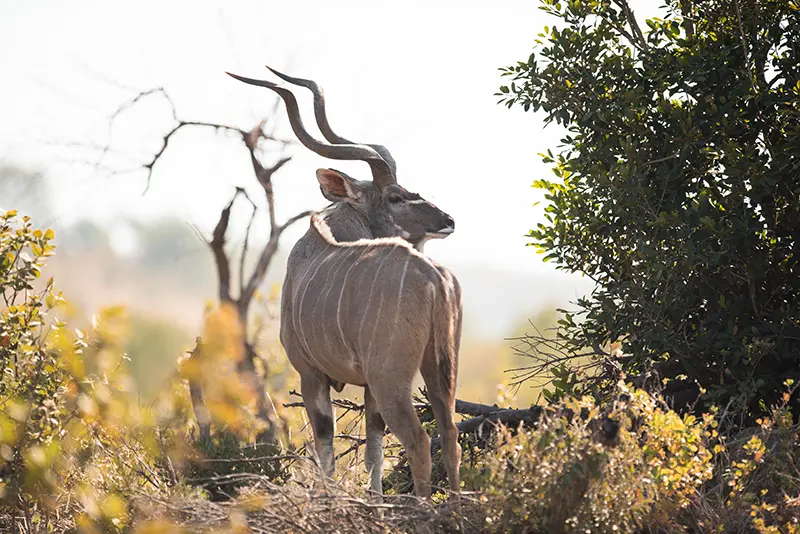
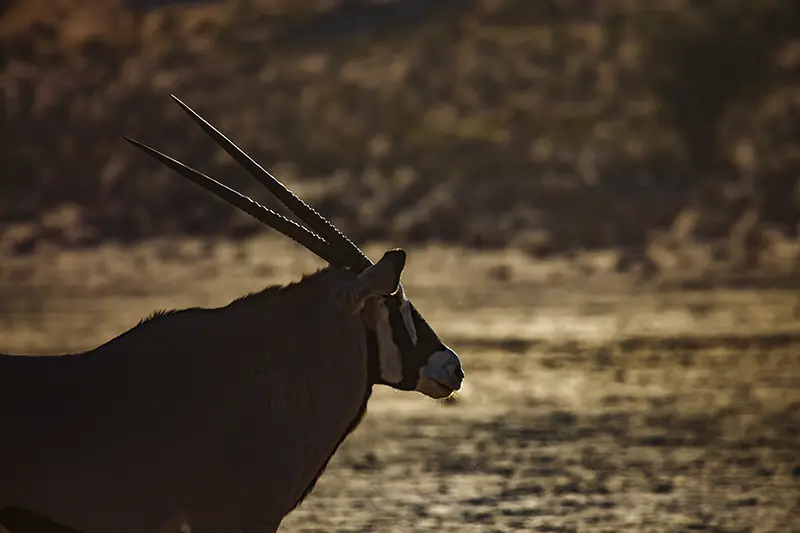
Days 3–5 — Active Hunting: Full hunting days following the rhythm of the bush. Early morning departure, walk-and-stalk through mopane woodland and open savanna, midday rest at the lodge, and afternoon hunting. Each day targets different species or areas of the concession. Whether you are after a majestic kudu bull, a golden wildebeest, or a heavy-horned gemsbok, your PH adapts the plan to opportunities as they arise.
Days 6–7 — Final Hunts and Departure Preparation: Remaining species on your wish list are pursued. Your trophies are inspected, measured, and photographed. Your PH reviews taxidermy and shipping options with you. On your final evening, enjoy a traditional braai (barbecue) with your hosts — often featuring game meat from your own hunt.
Departure Day: After breakfast, you are driven back to Johannesburg for your evening flight home. Your trophies remain in South Africa for professional processing and will be shipped to you once completed, typically within 8–12 months.
Trophy Import to the United States
Getting your trophies home to the US requires compliance with several federal regulations. Your taxidermist and shipping agent in South Africa will handle the export side, but you should understand the US import requirements:
- US Fish & Wildlife Service (USFWS): All wildlife trophies entering the United States must be declared to USFWS. Trophies must enter through a designated port of entry for wildlife — the major ones include Los Angeles, San Francisco, Miami, Dallas/Fort Worth, Chicago, Atlanta, New York JFK, Seattle, and Houston.
- USFWS Form 3-177: A Declaration for Importation or Exportation of Fish or Wildlife must be filed for each shipment. Your shipping agent typically handles this, but you are responsible for ensuring it is done correctly.
- CITES permits: Species listed under the Convention on International Trade in Endangered Species require CITES export permits from South Africa and CITES import permits from the US. Common South African game species like kudu, impala, and wildebeest are generally not CITES-listed, but always confirm with your outfitter and shipping agent for your specific species list.
- Lacey Act compliance: The Lacey Act prohibits the import of wildlife taken in violation of foreign law. Hunting with a licensed outfitter on a legal concession and holding valid permits ensures compliance.
- CBP declaration: All trophies must be declared to US Customs and Border Protection. Trophies are generally duty-free as personal hunting trophies but must still be declared.
- Shipping agents: Reputable South African shipping agents who specialize in US trophy imports include Fauna & Flora, Trophy Shippers, and Airways Customs Clearing. Your outfitter will recommend an agent experienced with US import requirements.
Budget Planning in USD
Understanding the cost structure helps you plan effectively. South African hunting safaris operate on a daily rate plus trophy fee model. Below is a general guide — consult the current price list for exact rates.
- Daily rates: Typically $350–$450 per hunter per day, covering accommodation, meals, beverages, Professional Hunter, vehicle, trackers, and skinners. Non-hunting companions usually have a reduced observer rate.
- Trophy fees: Paid per animal harvested. Our current fees: Impala $525, Blue Wildebeest $1,250, Kudu $3,100, Gemsbok $1,650, Warthog $400. See the full Trophy Price List for all 39 species.
- Flights: Round-trip economy class from the US to Johannesburg ranges from $900–$1,800 depending on season, airline, and how far in advance you book. Business class is $3,500–$7,000.
- Travel insurance: $150–$400 for comprehensive coverage including medical evacuation.
- Taxidermy and shipping: This is often the most underestimated cost. A shoulder mount processed in South Africa costs $400–$800 per animal; dip-and-pack (raw treated skins and skulls) is significantly cheaper at $100–$250 per animal. Shipping to the US typically runs $1,500–$3,500 per crate depending on size and destination.
Sample 7-day safari budget (one hunter, 5 hunting days, 3–4 animals):
- Daily rates (7 days): $2,800
- Trophy fees: Charged per animal harvested, according to the trophy price list. You only pay for what you take. Prices vary significantly by species — impala are affordable, while kudu and sable command higher fees.
- Flights (economy, estimated): $1,000–$2,000
- Travel insurance (estimated): $150–$350
- Tips (estimated): $500–$1,000
- Taxidermy dip-and-pack + shipping (estimated): $2,000–$5,000
Frequently Asked Questions
Do I need a South African hunting license?
No. As a foreign hunter, you do not need a separate South African hunting license. You hunt under the license and supervision of your registered Professional Hunter. Your SAPS 520 temporary firearm permit and your outfitter’s concession permits cover the legal requirements.
Can I bring a semi-automatic rifle or AR-15 to South Africa?
South African law permits the temporary import of semi-automatic rifles for hunting purposes, but they are subject to additional scrutiny and may cause delays at the SAPS desk. More importantly, semi-automatic rifles and AR-platform firearms are not ideal for plains game hunting — a quality bolt-action rifle in an appropriate caliber is the standard, the most reliable choice for the bush, and will cause no permit complications. If you do bring a semi-automatic, limit the magazine capacity to five rounds.
Is South Africa safe for American travelers?
South Africa’s major cities have areas that require caution, as with any large city. However, as a hunting client you are met at the airport and driven directly to a private game farm in a rural area. The Limpopo bushveld is a safe, remote environment. Exercise normal urban precautions during any time spent in Johannesburg — your outfitter will advise on safe practices.
What are the tipping customs?
Tipping is customary and appreciated. The general guideline is $150–$250 per hunting day for your Professional Hunter and $20–$30 per day distributed among camp staff (trackers, skinners, kitchen and lodge staff). Tips can be given in US dollars or South African Rand. Present tips at the end of your safari, ideally in envelopes.
Can my family join on a non-hunting photo safari?
Absolutely. Non-hunting companions are welcome at the lodge and can enjoy game drives, birdwatching, photography, or simply relaxing at the lodge. Many American hunters combine their safari with a family-friendly Kruger National Park visit, which is within easy driving distance of the Limpopo hunting area. Discuss options with your outfitter when booking.
Are credit cards accepted, or should I bring cash?
Gaspare Spanio Safaris can advise on accepted payment methods when you book — typically bank transfers for deposits and balances, with credit cards sometimes accepted for incidentals. Bring US dollars in cash for tips and small purchases. South African ATMs dispense Rand and are widely available in towns, but you will not need much cash on the concession itself.
What is the time difference between the US and South Africa?
South Africa is on SAST (South African Standard Time), which is UTC+2 with no daylight saving time. During US Eastern Daylight Time (March–November), South Africa is 6 hours ahead. During US Eastern Standard Time (November–March), South Africa is 7 hours ahead. Central, Mountain, and Pacific time zones are 7–9 hours behind South Africa depending on the season. Jet lag is typically mild because the flight is mostly north-south rather than east-west.
Do I need to be extremely fit to hunt in Limpopo?
A reasonable level of fitness is sufficient. Walk-and-stalk hunting in the bushveld typically involves walking 5–15 kilometers per day over relatively flat to gently undulating terrain. The altitude is around 1,000–1,200 meters (3,300–4,000 feet) above sea level, which does not pose altitude-related issues. If you can walk several miles at a moderate pace and handle a few hours in warm afternoon conditions, you will do well. That said, better fitness means a more enjoyable hunt — start a walking program a few months before your trip.
Ready to plan your South African hunting safari? Whether you are pursuing your first kudu or adding to a lifetime of trophies, Gaspare Spanio Safaris makes the experience seamless from departure to homecoming. Browse the available species, review the price list, and get in touch to start building your safari.

