


About the Tsessebe
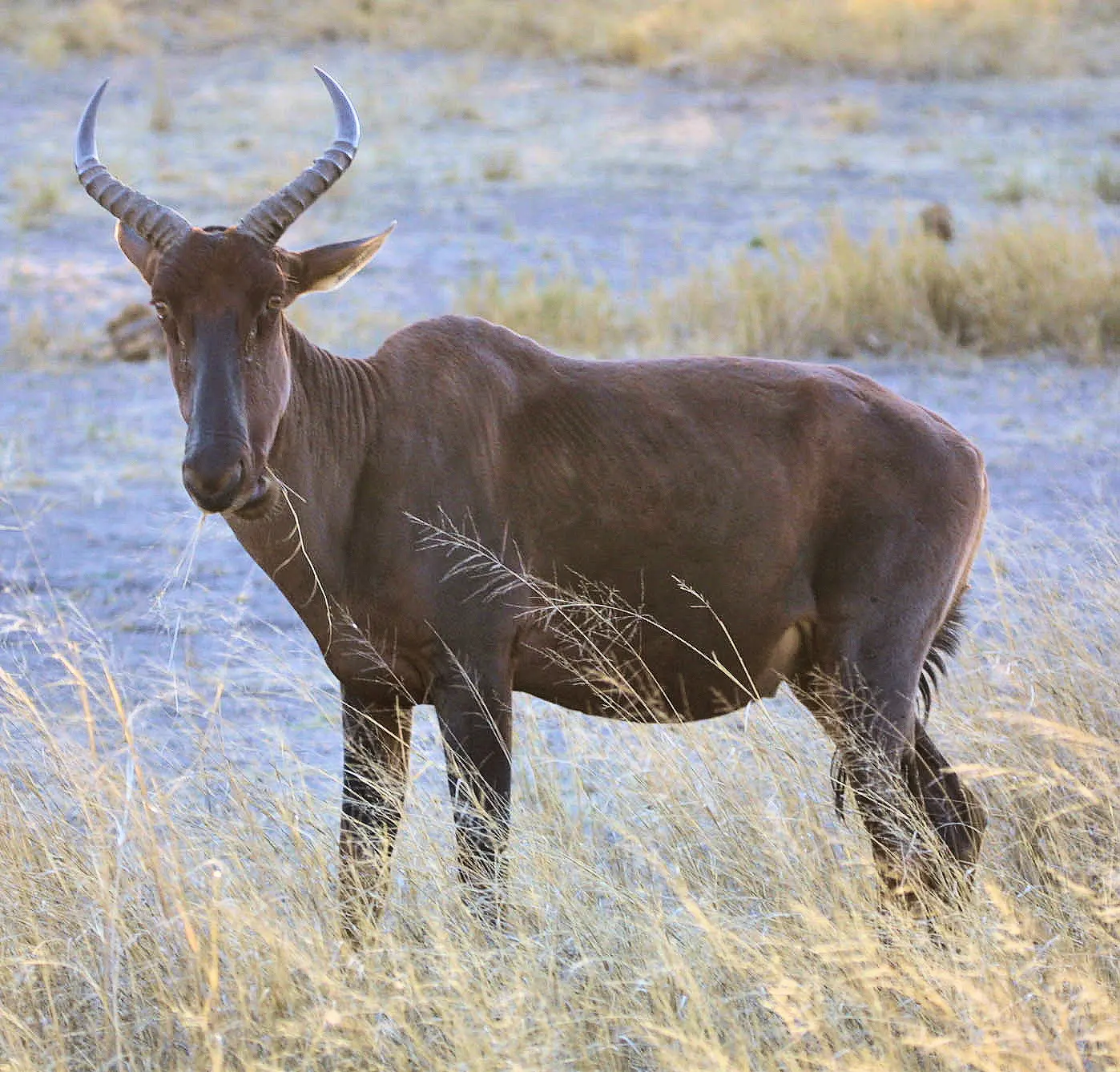
The tsessebe (Damaliscus lunatus lunatus) is a large, striking antelope standing approximately 120 centimetres at the shoulder and weighing between 120 and 150 kilograms. They have a distinctive appearance with a rich dark reddish-brown to purplish-brown coat, noticeably darker on the face, shoulders, and upper legs. Their high-shouldered, sloping-backed build and elongated face give them a somewhat ungainly appearance when standing — an impression that is dramatically contradicted when they break into a run.
Tsessebe are the fastest antelope in Africa, capable of sustained speeds exceeding 90 kilometres per hour. This extraordinary speed, combined with exceptional stamina, makes them virtually impossible to run down and extremely difficult to approach on foot. They are found in open grassland and light woodland savanna, where their speed and keen eyesight serve as their primary defences.
Both sexes carry lyre-shaped horns that curve outward, upward, and then inward. Males have thicker, more robust horns than females. Tsessebe live in small herds and are territorial — dominant bulls establish territories that they defend vigorously during the breeding season.
Tsessebe Hunting Methods
Tsessebe hunting requires careful planning to overcome the animal’s speed and alertness:
- Spot and stalk from distance: Tsessebe are located in open grassland using binoculars or a spotting scope, and a long, careful stalk is planned using terrain and vegetation. Their preference for open habitats means that approach distances are often long, and the final stalk requires patience and good use of cover.
- Water point ambush: Like many grassland species, tsessebe visit water during the hotter parts of the day. Setting up near a known water source can provide a shot opportunity at closer range than is typically possible during a stalk.
- Early morning hunts: Tsessebe are most active during the cool early morning hours when they feed in the open. This is often the best time for glassing and planning a stalk before the heat of the day drives them into shade.
Shooting distances tend to be longer than for many other antelope — 150 to 250 metres is common. A flat-shooting, well-zeroed rifle and the ability to shoot accurately from sticks or a rest at these distances are essential.
What Is a Trophy Tsessebe? — Rowland Ward & SCI Standards
Tsessebe trophies are measured by horn length. The Rowland Ward minimum is 15 inches; the world record stands at 18⅜ inches. The SCI minimum is 35 points; the SCI world record is 48⅛ points. A good trophy bull will carry horns of 15 to 17 inches — specimens over 17 inches are exceptional. The distinctive lyre shape — curving outward and upward before turning inward at the tips — is one of the most attractive horn configurations in African antelope.
Shoulder mounts are the most popular option and beautifully showcase the tsessebe’s unique colouration and horn shape. The dark, rich coat and distinctive profile make this an eye-catching mount that stands out in any trophy room.
Current tsessebe trophy fees are listed on our South Africa Trophy Price List. Tsessebe is a premium species reflecting their limited availability on private reserves.
Tsessebe Shot Placement — Vital Zone & Long-Range Calibers
For a visual overview across all species, see our South Africa Shot Placement Guide. Standard broadside heart/lung shot placement is recommended — aim directly behind the front shoulder, one-third of the way up from the belly line. Tsessebe are solidly built animals, and a well-placed shot with an adequate caliber will anchor them reliably. The high-shouldered build means the heart sits slightly lower in the chest than on some other antelope — aim for the lower third of the shoulder area.
Recommended calibers are .270 Winchester through .30-06 Springfield. These calibers provide the flat trajectory needed for longer-range shooting and sufficient energy for clean kills on a medium-large antelope. The .270 is an excellent choice for its flat-shooting characteristics. Use quality expanding bullets for reliable terminal performance.
Best Time to Hunt Tsessebe in South Africa
Tsessebe hunting is most productive during the dry winter months from May through September:
- Visibility: Shorter, drier grass in the open grassland habitat is essential for spotting and planning stalks on this wide-ranging species.
- Predictable movement: Water dependency concentrates tsessebe around permanent water points during the dry season, making them easier to locate and intercept.
- Rut (February–April): Dominant bulls are highly active and visible during the breeding season — if hunting in autumn, rut activity can provide excellent trophy assessment opportunities.
- Conditions: Winter temperatures of 15–25°C and dry underfoot conditions make for comfortable long-range shooting conditions in open terrain.
A tsessebe hunt pairs well with blue wildebeest, kudu, and sable antelope for a premium Limpopo plains game combination. Browse our hunting packages for multi-species options.
Frequently Asked Questions
How rare is the tsessebe?
The tsessebe is one of the rarer antelope species available on a South African safari. While not endangered (listed as Vulnerable by the IUCN in some assessments), free-ranging populations in South Africa are limited and concentrated on specific private reserves and conservancies. This rarity contributes to the tsessebe’s prestige as a trophy species and is reflected in the trophy fee.
Is the tsessebe really the fastest antelope?
Yes. While the pronghorn of North America is often cited as the fastest, the tsessebe holds the title in Africa. Sustained speeds exceeding 90 km/h have been documented, and they can maintain high speeds over considerable distances. This speed makes them extremely difficult to pursue and is one of the reasons they are such a challenging and rewarding trophy at Gaspare Spanio Safaris.
How many days should I allow for a tsessebe hunt?
We recommend allocating at least two to three dedicated days for a tsessebe hunt. Their wariness and speed mean that not every stalk will result in a shot opportunity. Patience and persistence are rewarded. A tsessebe hunt combines well with a broader plains game safari, providing variety and a standout trophy species.
Hunters who pursue Tsessebe also enjoy these species:
- Red Hartebeest Hunting South Africa
- Wildebeest Hunting South Africa
- Blesbok Hunting South Africa
- Roan Antelope Hunting South Africa
View all huntable species at Gaspare Spanio Safaris.
Pursue Africa’s fastest antelope across the open grasslands of Limpopo. Contact Gaspare Spanio Safaris to add a tsessebe to your South African hunting safari — a rare and prestigious trophy that only a fortunate few will ever take.

