


About the Animal
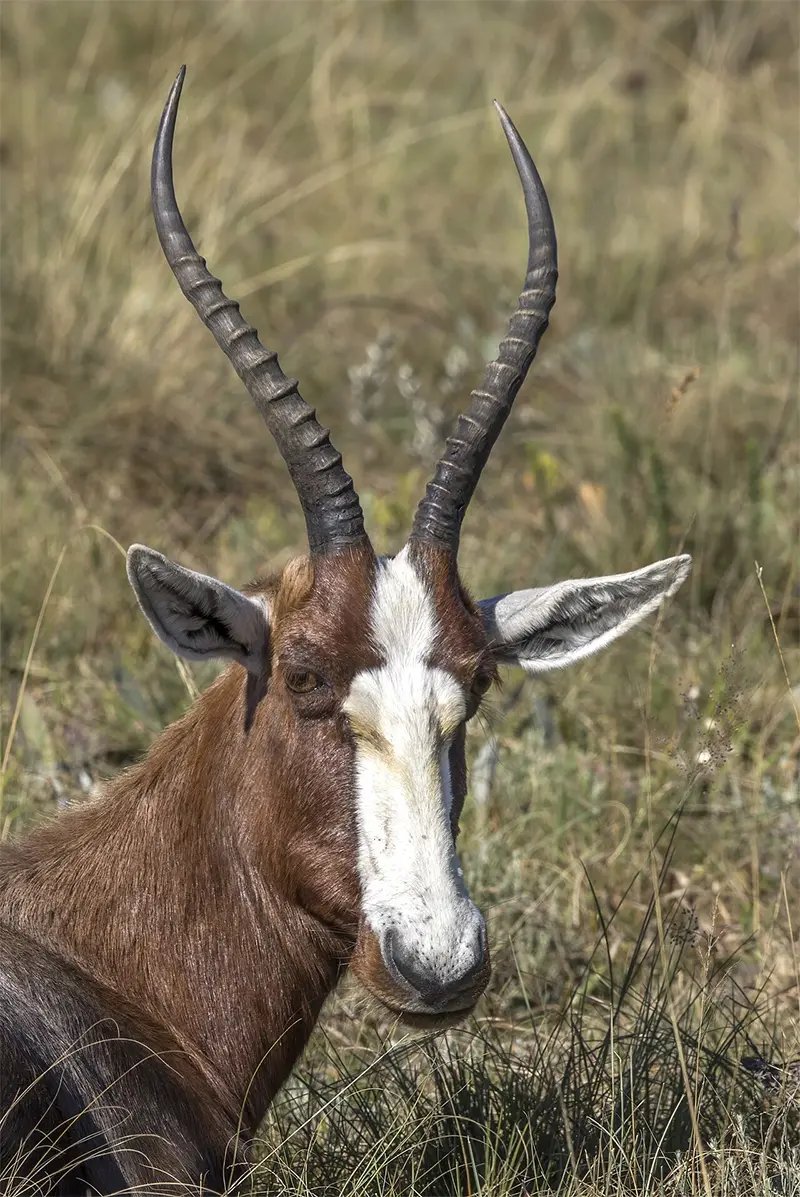
The blesbok (Damaliscus pygargus phillipsi) is a medium-sized antelope endemic to South Africa, standing approximately 85-100 cm at the shoulder and weighing between 55 and 80 kg. The species is closely related to the bontebok of the Western Cape, but is more abundant and widely distributed. The blesbok’s most recognisable feature is the prominent white blaze that runs down the face from forehead to nose, contrasting sharply with the rich reddish-brown coat. The flanks and hindquarters are a lighter tan, and the lower legs are typically darker. Both sexes carry horns, though the bull’s are heavier and more widely spread. The horns rise vertically from the skull before curving slightly outward and backward, with a heavily ridged surface on the front face.
Blesbok are predominantly grazers, feeding on short grasses in open grassland and open savanna. They are gregarious animals found in herds that can number from a handful to several hundred individuals on large properties. Territorial rams defend small territories during the breeding season, which peaks around March and April. Outside the rut, blesbok form mixed herds of varying sizes and are commonly found alongside other grassland species such as springbok, black wildebeest, and red hartebeest.
Two colour variants exist: the common blesbok, with its classic reddish-brown coat, and the white blesbok, a naturally occurring colour morph with a predominantly white coat and lighter markings. Both variants are hunted in South Africa, with the white blesbok commanding a slightly higher trophy fee due to its relative scarcity and visual appeal.
Hunting Methods
Rifle Hunting
Rifle hunting for blesbok is a quintessential open-country experience. Blesbok inhabit open grassland with minimal cover, so shots tend to be at moderate to long range — 150 to 300 metres is standard, with some opportunities requiring shooting skill at 350 metres or beyond. A flat-shooting, moderate-recoil caliber is ideal. The .243 Winchester is perfectly adequate for blesbok and is an excellent choice for younger or recoil-sensitive hunters. The .270 Winchester is the most popular choice among experienced hunters, offering an ideal balance of trajectory, energy, and versatility. Quality 100-grain to 130-grain bullets in either caliber will handle any blesbok cleanly. A good-quality scope in the 3-12x range is recommended, and the ability to shoot accurately from shooting sticks at 200 metres is a valuable skill.
The typical hunt involves driving or walking through open grassland until a herd is located, then using the available terrain — dry stream beds, slight ridges, termite mounds — to stalk within range. Blesbok are alert and tend to keep a comfortable distance from perceived threats, but they are less flighty than some grassland species and will often stop to look back after an initial flight, giving an alert hunter a second opportunity.
Bow Hunting
Bow hunting blesbok is highly rewarding and achievable for the intermediate archer. A compound bow with a draw weight of 55-65 pounds is sufficient for these medium-sized antelope. Waterhole blinds and ground blinds placed along established trails offer the most reliable shot opportunities, typically at 20-35 metres. Because blesbok are habitual in their movements and tend to visit the same water sources at predictable times, a patient archer sitting a well-placed blind can expect an opportunity within a day or two. Fixed-blade broadheads are recommended for clean, reliable penetration.
Spot and Stalk
Spot-and-stalk hunting for blesbok on the open grassland is a delightful challenge that tests a hunter’s ability to use minimal terrain features for concealment. The hunt begins with glassing from a vantage point to locate a herd and identify a mature ram, then planning and executing a stalk across open ground. The lack of cover means that every fold in the ground, every patch of longer grass, and every slight undulation must be exploited to its maximum advantage. Wind management is critical, as blesbok have a good sense of smell in addition to their sharp eyesight. This style of hunting is physically easier than pursuing species in mountainous terrain, but the mental challenge of covering open ground without being detected is considerable and immensely satisfying when successful.
Where to Hunt
Blesbok are found across the central and northern grasslands of South Africa, from the Free State through Gauteng, Mpumalanga, and into Limpopo Province. They thrive on managed grassland within private game farms and conservancies, where controlled grazing and supplementary management ensure healthy, productive herds. Gaspare Spanio Safaris offers blesbok hunting South Africa on their 3,000-hectare private game farm in Limpopo, where open grassland areas within the mixed bushveld landscape provide ideal blesbok habitat. Both common and white blesbok variants are available, giving hunters the option to pursue either or both during their safari.
The private conservancy setting ensures that blesbok herds are well managed and that trophy-quality rams are available throughout the hunting season. Unlike public land or unmanaged properties where blesbok may be heavily pressured and skittish, the animals on a well-run private farm are in excellent condition and exhibit natural behaviour that makes for a more authentic and enjoyable hunting experience.
Best Time to Hunt
Blesbok hunting South Africa is available from March through October, with the optimal period falling in the cooler dry months from May through August. During this time, the grass has dried and shortened, greatly improving visibility across the open plains where blesbok feed. Water sources become concentrated, making animal movements more predictable. The cooler temperatures are also far more comfortable for walking and stalking in open terrain.
The rut occurs in March and April, when territorial rams are at their most visible and active. This can be an excellent time to hunt, as rams are distracted by breeding activities and may be less alert to approaching hunters. However, the grass is still relatively tall in March, which can make spotting and evaluating trophies more difficult. For most visiting hunters, the June-August window offers the best all-round conditions.
What Is a Trophy Blesbok? — Rowland Ward & SCI Standards
Blesbok trophies are measured by horn length from base to tip. The minimum entry scores for the major record books are:
- SCI (Safari Club International) minimum: 40 inches (combined score)
- Rowland Ward minimum: 16.5 inches (single longest horn)
- Rowland Ward world record: 19⅝ inches — taken in South Africa
- SCI world record: 76⅞ points
A quality blesbok ram will measure 17 inches or more, with heavy, well-ridged bases and good overall length. When evaluating a blesbok in the field, look for horns that rise well above the ears and show a clear outward splay before curving back. Heavy ridging on the front surface of the horns extends approximately two-thirds of the way up and is a reliable indicator of maturity. Rams with worn or broken horn tips are typically older animals and may carry impressive bases despite modest length. Your professional hunter will help you distinguish between rams and ewes and evaluate trophy quality before the shot.
Current blesbok trophy fees — for both common and white variants — are listed on our South Africa Trophy Price List. Blesbok represents some of the best value in African plains game hunting.
Blesbok Shot Placement — Open-Country Vital Zone
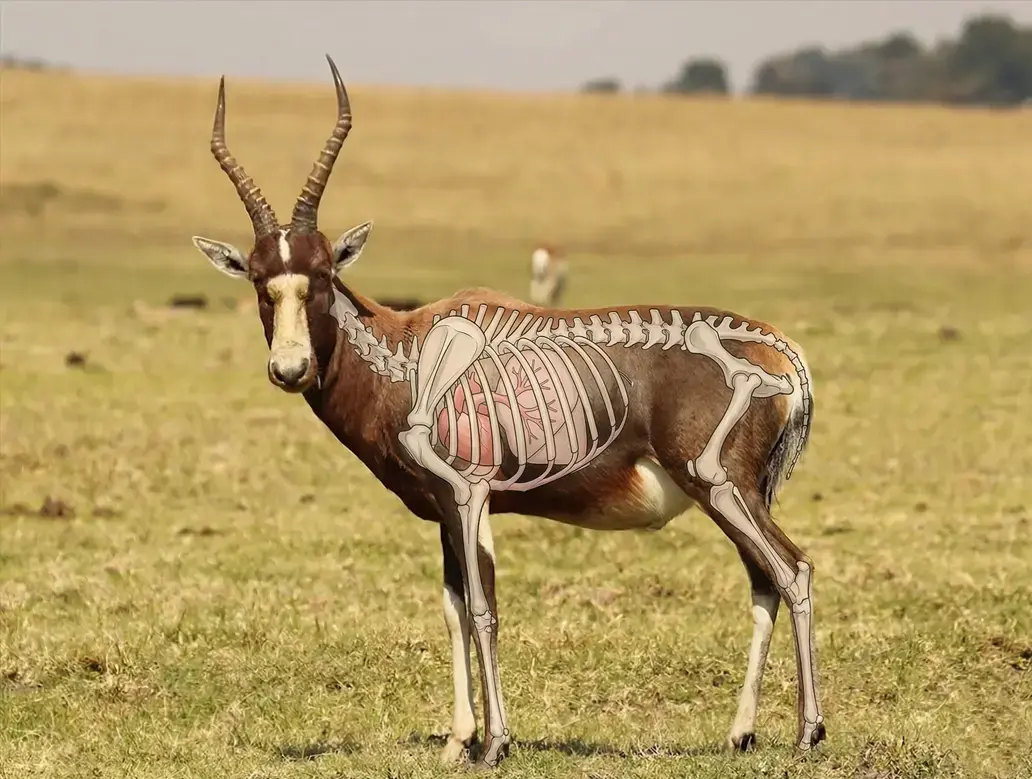
Shot placement on blesbok follows standard plains game principles with one important consideration. For a visual overview across all species, see our South Africa Shot Placement Guide. the blesbok’s body, like that of its relative the hartebeest, slopes downward from the shoulders to the hips, placing the vitals slightly higher and further forward than on a conventionally proportioned antelope. On a broadside shot, aim at the centre of the shoulder, approximately one-third to halfway up from the brisket. This targets the heart-lung area and produces a quick, humane kill.

A common error is aiming too far back, resulting in a paunch shot that causes unnecessary suffering and a lengthy tracking exercise. When in doubt, favour a slightly forward aim point. The shoulder joint of a blesbok is not heavy enough to resist a well-constructed bullet from a .243 or .270, so a shoulder shot that anchors the animal instantly is perfectly feasible without excessive meat damage.
On quartering-away presentations, aim so that the bullet exits through the opposite shoulder. Avoid steep quartering-towards angles, as the narrow chest and sloping body make it difficult to reach the vitals reliably from the front.
What’s Included
A blesbok hunting package with Gaspare Spanio Safaris typically includes:
- Professional hunter and field staff for the duration of your hunt
- Full-board lodge accommodation with all meals and refreshments
- 4×4 hunting vehicles and in-field transportation
- Field preparation of your trophy — skinning, salting, and initial care
- Cold storage and coordination with your taxidermist
- Rifle permit and temporary import documentation assistance
- Airport transfers from Polokwane or Johannesburg
- Laundry service and lodge amenities
Blesbok is one of the most affordable plains game trophies available in South Africa, making it an ideal species for first-time African hunters or for experienced sportsmen looking to add to their collection without breaking the budget. Trophy fees, taxidermy, dipping, packing, shipping, and gratuities are quoted separately.
Frequently Asked Questions
What is the difference between a blesbok and a bontebok?
The blesbok and bontebok are closely related subspecies of Damaliscus pygargus. The bontebok is found only in the Western Cape and is darker in colour with a continuous white facial blaze, while the blesbok is lighter reddish-brown and has a blaze that is typically broken between the eyes. The blesbok is far more numerous and widely distributed, while the bontebok is a conservation-managed species with strict hunting regulations. For most visiting hunters, the blesbok is the readily available option.
Is blesbok a good first African trophy?
Blesbok is an outstanding choice for a first African hunt. The animal is found in accessible, open terrain that is easy to hunt on foot, the trophy fee is affordable, and the hunting experience is genuine and rewarding. Blesbok hunting also provides an excellent opportunity to develop field skills — judging distance, shooting from sticks, reading wind — that will serve you well on future safaris pursuing more demanding species. Browse our hunting packages to combine blesbok with other plains game species.
Can I hunt both common and white blesbok?
Yes, both the common blesbok and the white blesbok variant are available on many South African hunting properties. The white blesbok typically commands a slightly higher trophy fee. Taking both variants on the same safari is a popular option for collectors, as the two colour morphs make a striking pair when mounted together.
What caliber should I use for blesbok?
The .243 Winchester is the minimum recommended caliber and is perfectly adequate for blesbok. The .270 Winchester is the most popular choice, offering flat trajectory and mild recoil that is well suited to the open-country shooting that blesbok hunting demands. The .30-06 is also a fine option, particularly if you plan to use the same rifle on larger species during the safari. Premium controlled-expansion bullets in the 100-150 grain range are ideal.
How does white blesbok differ as a trophy?
The white blesbok is a naturally occurring colour variant with a predominantly white or cream coat, pale horns, and lighter facial markings. Trophy quality is assessed by the same horn measurements as the common blesbok, and the minimum record book entries are the same. The white blesbok’s distinctive colouring makes it a visually striking mount that stands out in any trophy room. Horn quality and body size are generally comparable to the common variant.
Whether you choose the classic common blesbok or the distinctive white variant, blesbok hunting South Africa offers outstanding value and a genuinely enjoyable hunting experience on the open grasslands of Limpopo. Contact Gaspare Spanio Safaris to include blesbok in your plains game safari — it is a trophy you will not regret pursuing.
Related Hunts
Hunters who pursue Blesbok also enjoy these species:
- Springbok Hunting South Africa
- Impala Hunting South Africa
- Red Hartebeest Hunting South Africa
- Wildebeest Hunting South Africa
View all huntable species at Gaspare Spanio Safaris.

