


About the Animal
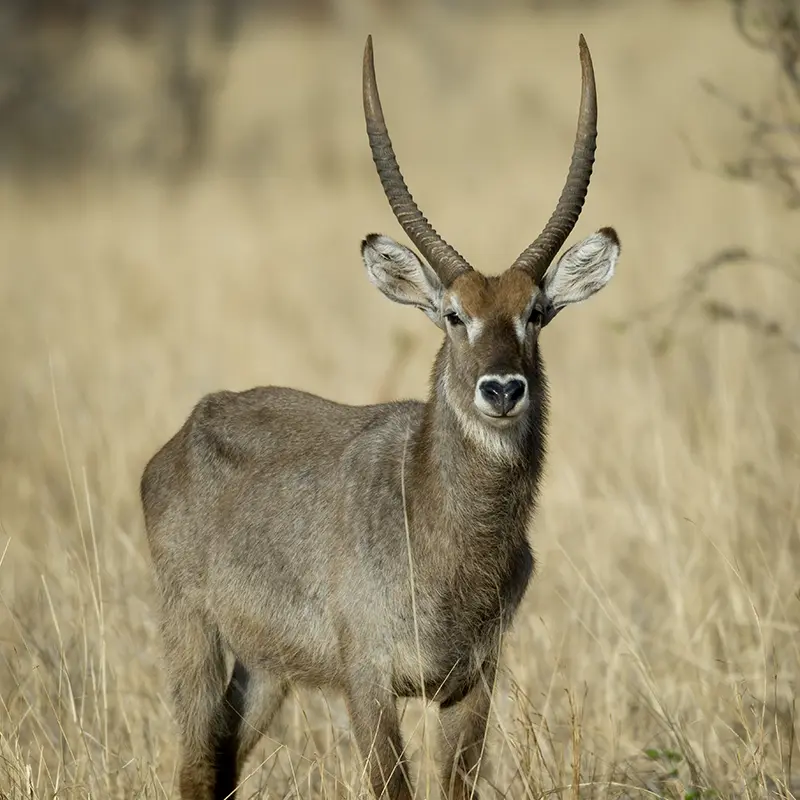
The common waterbuck (Kobus ellipsiprymnus) is a large, robust antelope that favours areas close to permanent water. Bulls stand 120 to 136 cm at the shoulder and weigh between 200 and 270 kg — substantially larger than most plains game species and comparable in weight to a kudu. The waterbuck’s coat is rough, long, and grizzled grey-brown, with a distinctive greasy, oily texture and a strong, musky odour produced by waterproofing secretions from the skin glands. This oily coat is a practical adaptation to the animal’s semi-aquatic lifestyle and provides excellent insulation and water repellency.
The most recognisable feature of the common waterbuck is the bold white elliptical ring on the rump — a marking so distinctive that the animal is impossible to confuse with any other species. The face features a lighter area around the mouth and nose, and the throat often shows a white bib. Only bulls carry horns, which are long, heavily ridged, and sweep upward and outward in a graceful forward curve before curving back at the tips. A mature bull’s horns can exceed 30 inches and are among the most impressive of all African antelope.
Waterbuck are grazers with a strong dependence on fresh green grass and permanent water. They are rarely found more than a few hundred metres from a river, dam, or other water source, which makes them relatively predictable in their habits. Herds typically comprise 5 to 15 females with their young, while mature bulls are either territorial or found in bachelor groups. Territorial bulls defend areas that encompass prime water access and grazing, and these are typically the largest-horned, most impressive specimens.
Hunting Methods
Rifle Hunting
Rifle hunting is the primary method for waterbuck and typically involves hunting along rivers, dam margins, and drainage lines where the animals concentrate. The approach often begins by glassing these water-associated habitats from a vantage point or driving slowly along watercourses. Once a mature bull has been identified, the stalk begins on foot. Waterbuck habitat tends to offer a mix of open grassland near water and denser bush on the fringes, providing both challenges and opportunities during the approach. Shots typically range from 100 to 200 metres.
Caliber selection for waterbuck should reflect the animal’s size and toughness. A .30-06 Springfield with 180-grain premium bonded or monolithic bullets is the minimum recommended caliber. The .300 Winchester Magnum is the preferred choice, offering the additional energy and penetration needed for a clean kill on an animal that can weigh over 250 kg. The .338 Winchester Magnum and 9.3x62mm are also excellent options. Waterbuck have heavy bones, thick skin, and dense muscle — particularly around the shoulder — and light or rapidly expanding bullets may not provide adequate penetration for a reliable kill, especially on quartering shots.
Bow Hunting
Bow hunting waterbuck is a viable and exciting option, given the animal’s close association with water. Blinds set at water points, dams, or along the banks of rivers can produce excellent close-range opportunities. Waterbuck drink regularly and tend to spend considerable time at water, giving the bow hunter time to evaluate the animal, confirm it is a mature bull, and wait for the ideal shot angle. A minimum draw weight of 70 pounds is strongly recommended for waterbuck. Use heavy, fixed-blade broadheads on arrows with a total weight of at least 500 grains. The animal’s thick, oily hide and heavy muscle demand deep penetration. Broadside shots at 15 to 25 metres from a water blind are the ideal scenario.
Walk and Stalk
Walk-and-stalk waterbuck hunting is one of the most enjoyable methods, combining the scenic beauty of hunting near water with the technical challenge of approaching a large, alert animal on foot. Your professional hunter will lead you along rivers, around dams, and through the drainage lines where waterbuck feed and rest. The stalk requires careful attention to wind direction, as waterbuck have an excellent sense of smell. They also have good eyesight, though their reliance on water makes them more predictable in their movements than many other species. The most productive approach is to identify a territorial bull’s area — typically a stretch of river bank or a dam margin — and make a careful, patient stalk using the available cover. Morning hunts, when waterbuck are feeding in the open near water, tend to offer the best opportunities.
Where to Hunt
Waterbuck require permanent water and are found throughout Limpopo Province in areas with suitable river systems, dams, and drainage lines. Gaspare Spanio Safaris’ private game farm includes several water features — dams, seasonal rivers, and permanent water points — that support a healthy waterbuck population. The property’s varied terrain, from open vlei grassland near water to dense bush on higher ground, provides classic waterbuck habitat and diverse hunting conditions. Waterbuck hunting South Africa in Limpopo is popular because the region’s concentration of water features in an otherwise semi-arid landscape makes these animals relatively accessible compared to the vast, remote areas of East Africa where they are also found.
Best Time to Hunt
Waterbuck can be hunted year-round in Limpopo, and their close association with permanent water means they are less affected by seasonal changes than many other species. The dry winter months from May to September are generally preferred for the standard reasons — thinner vegetation, cooler temperatures, and easier tracking conditions. During the dry season, waterbuck concentrate more tightly around remaining water sources, making them easier to locate. The breeding season is not sharply defined, though bulls tend to be most territorial and active from March through August, when dominant bulls can be found holding prime waterfront territories. Summer hunts from November to March are possible but more challenging due to dense vegetation, and the more dispersed water availability means waterbuck spread across a wider area.
Trophy Information
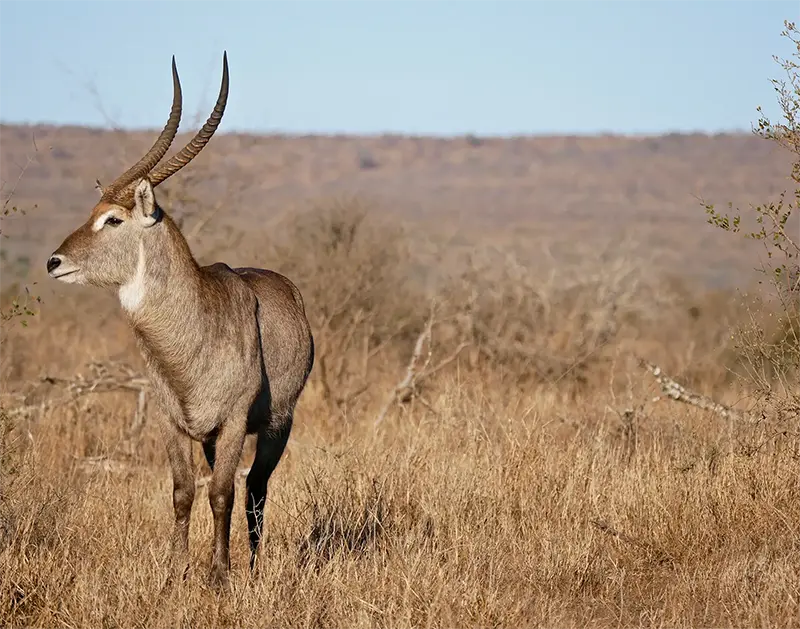
Waterbuck trophies are evaluated on horn length, base circumference, spread, and overall symmetry. Mature bulls develop long, heavily ridged horns that sweep upward, outward, and then curve forward at the tips. The ridges, or annulations, are deep and prominent on the lower two-thirds of the horn, becoming smoother toward the tips. An old bull’s horn tips may be worn or broken, which can affect the score but adds character to the trophy.
- SCI minimum entry score: 61 inches (combined measurements of both horns including circumference bases)
- Rowland Ward minimum entry: 28 inches (single longest horn, measured along the front curve)
A solid waterbuck trophy will have horns measuring 26 to 28 inches per side. Bulls exceeding 29 inches are excellent, and those over 30 inches are exceptional. In the field, horn length can be estimated by comparing the horns to the ear length (approximately 8 to 9 inches). A bull whose horns appear to be three to three and a half times the ear length is likely a good trophy. The spread of the horns, the depth of the ridging, and the symmetry between left and right are all factors your professional hunter will evaluate.
Shot Placement For a Waterbuck Hunt in South Africa
Waterbuck are large, heavily built animals, and precise shot placement with an adequate caliber is essential for a clean, ethical kill. For a broadside shot, place the crosshairs directly on the crease behind the front shoulder, one-third of the way up from the bottom of the chest. This targets the heart and lungs and is the most reliable shot for a quick kill. The heavy shoulder blade and associated muscle mass mean that a shot placed too far forward may fail to reach the vitals, particularly with lighter calibers or soft bullets.
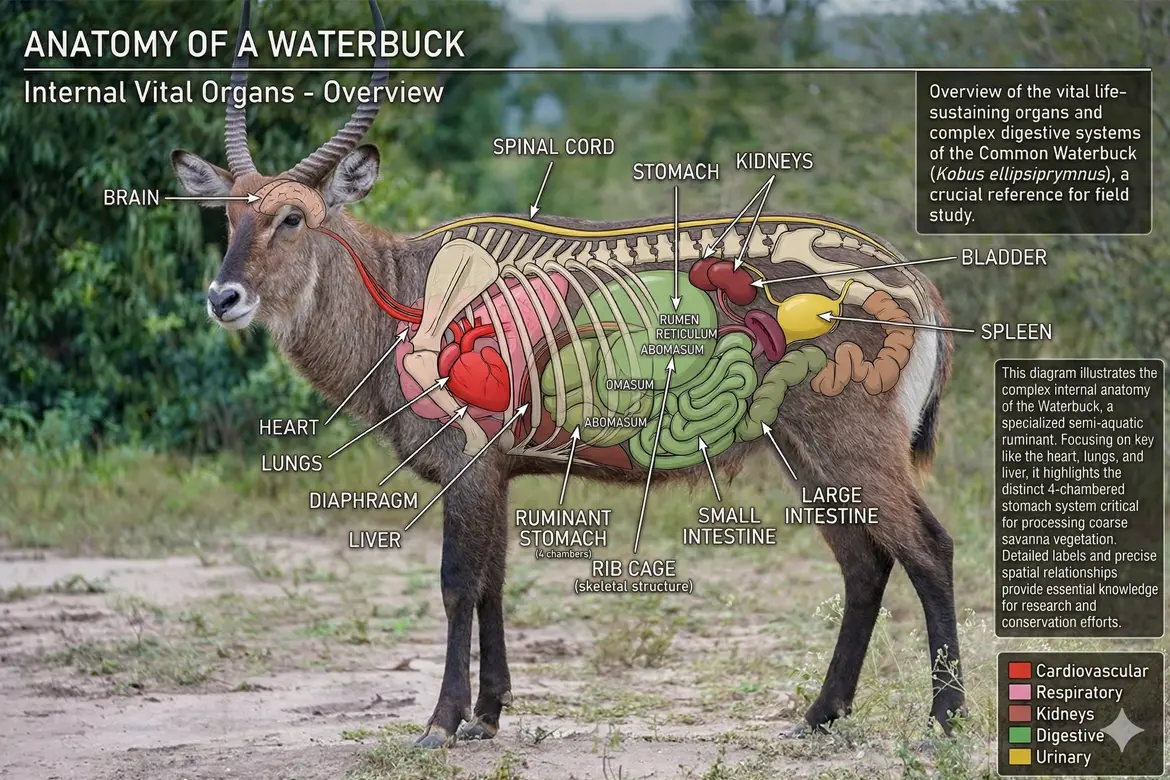
The high shoulder shot, placed at the top of the shoulder blade, can drop a waterbuck on the spot by disrupting the central nervous system, but the margin for error is small on an animal this size, and a shot placed even slightly high will wound without killing. The quartering-away shot is effective — aim for the opposite front shoulder through the rib cage, ensuring the bullet travels diagonally through the vitals. Avoid frontal shots. A wounded waterbuck will invariably head for water and dense reed beds, making recovery extremely difficult. Take your time, use adequate equipment, and wait for a clean broadside opportunity.

What’s Included
A waterbuck hunting package with Gaspare Spanio Safaris includes:
- Professional hunter and experienced trackers for the duration of your hunt
- Comfortable lodge accommodation on the private game farm with full en-suite facilities
- All meals, refreshments, and beverages during your safari
- 4×4 hunting vehicle and all field equipment including shooting sticks
- Field preparation of your trophy — skinning, salting, and delivery to the taxidermist
- Daily laundry service
- Airport transfers from Polokwane or Johannesburg by arrangement
Trophy fees, taxidermy, dipping and packing, and export permits are charged separately. Waterbuck are a premium plains game trophy — contact us for current pricing and availability.
Frequently Asked Questions
Is it true that waterbuck meat is inedible?
This is a common misconception. While waterbuck meat does have a stronger, more gamey flavour than most antelope due to the animal’s oily skin secretions, it is perfectly edible when properly prepared. The key is careful skinning to avoid transferring the skin oils to the meat, followed by thorough cleaning and appropriate preparation. Many experienced bushveld cooks produce excellent waterbuck dishes. That said, species such as impala, kudu, and gemsbok are generally preferred for the table.
How do I distinguish a mature bull from a younger animal?
A mature waterbuck bull will have a heavy, thick neck, a pronounced shoulder hump, and long horns with deep ridging extending well up the horn shaft. The body will appear large and barrel-shaped. Younger bulls have thinner necks, lighter builds, and shorter horns with less prominent ridging. In a herd, the dominant territorial bull will typically be found near the cows and will be noticeably larger than any satellite or bachelor bulls in the vicinity. Your professional hunter will take time to evaluate age and horn quality before recommending a shot.
Why do waterbuck have that white ring on their rumps?
The white elliptical ring on the rump of the common waterbuck is a distinctive identification marking that is believed to serve as a visual signal for herd cohesion, particularly when moving through dense vegetation near water. It allows individuals to follow each other through bush and reeds where visibility is limited. For the hunter, it is one of the most instantly recognisable markings in African wildlife and makes the waterbuck impossible to misidentify.
Can waterbuck be combined with other species on the same safari?
Absolutely. Waterbuck hunting South Africa is commonly combined with other Limpopo bushveld species. Because waterbuck are found near water, you will often encounter other species — bushbuck, nyala, warthog, and various birds — while hunting the same habitats. A seven- to ten-day safari provides ample time to pursue waterbuck alongside kudu, impala, blue wildebeest, gemsbok, and other species for a comprehensive plains game experience.
How close to water do waterbuck typically stay?
Waterbuck are seldom found more than a few hundred metres from permanent water. They drink at least once daily, and their entire home range is organised around access to rivers, dams, and other water sources. This dependence on water makes them relatively predictable — if you know where the water is, you know where to find waterbuck. It also means that the hunting environment is often especially scenic, with lush riparian vegetation and the constant presence of birdlife and other wildlife near water.
The waterbuck is a true classic of African plains game hunting — big, tough, and beautiful in its own distinctive way. Pursuing a mature bull along the waterways of the Limpopo bushveld is one of the finest experiences available to the visiting hunter, and a trophy waterbuck with its sweeping horns and iconic white rump ring is a magnificent addition to any collection. Contact Gaspare Spanio Safaris at gasparespaniosafaris.co.za to plan your waterbuck hunting South Africa safari and experience one of the most rewarding hunts in the bushveld.
Related Hunts
Hunters who pursue Waterbuck also enjoy these species:
- Nyala Hunting South Africa
- Kudu Hunting South Africa
- Bushbuck Hunting South Africa
- Wildebeest Hunting South Africa
View all huntable species at Gaspare Spanio Safaris.

