


About the Animal
The common eland is the world’s largest antelope, with mature bulls standing up to 1.7 metres at the shoulder and weighing between 700 and 900 kg. Cows are considerably smaller, typically weighing 300-450 kg. Both sexes carry spiral horns, though the bull’s are substantially thicker and heavier, with prominent ridges along the lower two-thirds. The eland’s coat is tawny to grey-brown, often developing a distinctive blue-grey hue in older bulls. Mature males develop a prominent dewlap beneath the throat and a dense mat of dark hair on the forehead, both of which increase with age and serve as reliable indicators of maturity in the field.
Eland are mixed feeders, both browsing and grazing depending on the season. They are surprisingly athletic for their size — a startled eland can clear a two-metre fence from a standing start. They form loose herds that can number from a handful to several dozen individuals, though old bulls are often found alone or in small bachelor groups. Despite their size, eland are nomadic and may cover vast distances in search of food and water, which can make locating them a genuine challenge even on properties with healthy populations.
One of the eland’s most remarkable features is the distinctive clicking sound produced by the tendons in the knees of mature bulls as they walk. This audible clicking can sometimes alert a hunter to the presence of an approaching eland in thick bush before the animal is even visible — a unique characteristic shared by no other antelope.
Hunting Methods
Rifle Hunting
Rifle hunting for eland requires a caliber with genuine authority. While a well-placed shot from a .30-06 Springfield loaded with premium 180-grain or 200-grain bullets can certainly kill an eland, many experienced hunters and professional guides recommend stepping up to the .300 Winchester Magnum or, ideally, the .375 H&H Magnum for large bulls. The sheer mass of a mature eland means that deep penetration through heavy bone and muscle is essential for a reliable, ethical kill. Controlled-expansion or bonded-core bullets such as the Swift A-Frame, Barnes TSX, or Nosler Partition are strongly recommended. Mount a quality scope in the 3-12x or 4-16x range, as shot distances can vary from 100 to 300 metres depending on terrain.
The typical approach involves driving the property in the early morning to locate fresh tracks, then following the spoor on foot — sometimes for several hours — until the herd is located. Once the animals are sighted, a careful stalk must be conducted using available cover and terrain to close the distance to within ethical shooting range. Eland have excellent eyesight and tend to position themselves in areas with good visibility, making the final approach the most critical and challenging phase of the hunt.
Bow Hunting
Bow hunting eland is achievable but requires serious preparation and equipment. A compound bow with a draw weight of 70 pounds or more is recommended, paired with heavy, fixed-blade broadheads capable of deep penetration through the eland’s thick hide and heavy muscle. Waterhole blinds are the most productive method for bow hunters, as approaching an eland on foot to within bow range in open terrain is extraordinarily difficult. Expect shots at 25-40 metres from a well-positioned blind. Arrow placement must be precise — aim for the lower third of the chest, slightly behind the shoulder crease, to hit the heart. A double-lung shot on an eland may still result in a lengthy tracking exercise given the animal’s incredible stamina.
Spot and Stalk
Spot-and-stalk hunting for eland is the classic method and arguably the most satisfying. It begins with locating a herd or fresh tracks from a vehicle or elevated vantage point, then pursuing the animals on foot. Eland are habitual walkers and may cover several kilometres between feeding and watering areas, so the stalk can involve hours of patient tracking across varied terrain. The key to success is reading the wind correctly and using terrain features — ridgelines, dry riverbeds, and scattered bush — to remain out of sight during the approach. Physical fitness is a genuine requirement for this method, as the combination of distance, heat, and the need for stealth makes it one of the most demanding hunts in Africa.
Where to Hunt
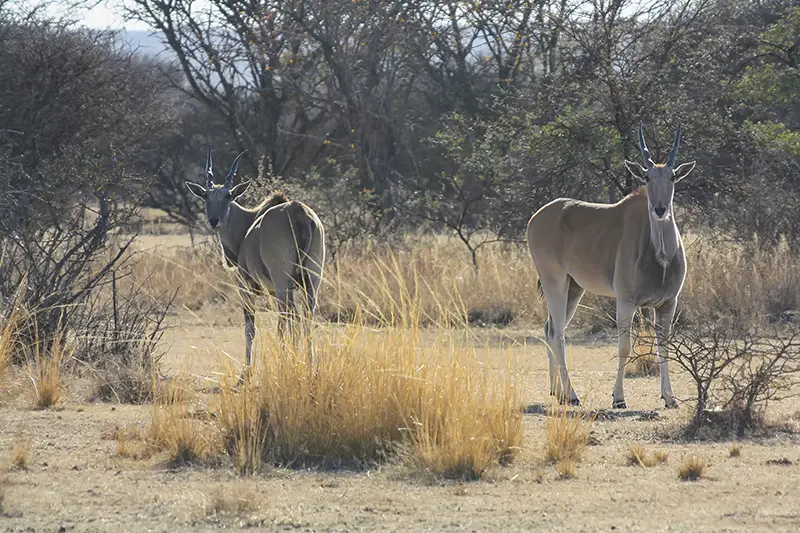
Eland are found across much of southern and eastern Africa, but South Africa’s Limpopo Province is one of the premier destinations for trophy eland hunting. The combination of mixed bushveld, open grassland, and scattered woodland provides ideal habitat for healthy eland populations. Gaspare Spanio Safaris operates on a 3,000-hectare private game farm in Limpopo where eland are carefully managed to produce consistently high-quality trophy bulls. The property’s diverse terrain — ranging from open plains to dense bush and rocky koppies — creates a hunting environment that is both challenging and visually spectacular.
The advantage of hunting eland on a well-managed private property is the certainty of encountering quality animals. Free-range eland on open concessions can be difficult to locate and may have been pressured by other hunters, whereas a private conservancy allows for selective management that ensures mature bulls reach their full trophy potential before being offered to visiting sportsmen.
Best Time to Hunt
Eland hunting South Africa is available year-round, but the prime season runs from April through September. The dry winter months bring several advantages: vegetation is thinner, making it easier to spot and track eland across the bush; water sources become concentrated, drawing herds to predictable locations; and the cooler temperatures make extended tracking on foot far more manageable. April and May are particularly good months, as the eland are in peak condition following the summer rains and bulls are carrying their heaviest horn growth.
The late winter months of August and September can also be excellent, as the dry conditions force eland to visit waterholes more frequently, increasing encounter rates. Avoid the height of summer (December-February) if possible, as the dense green vegetation and scattered water make eland harder to locate and the extreme heat can make extended stalks physically punishing.
Trophy Information
Eland trophies are measured by horn length, following the spiral from base to tip. The minimum entry scores for the major record books are:
- SCI (Safari Club International) minimum: 77 inches
- Rowland Ward minimum: 35 inches
A truly exceptional eland bull will measure 38 inches or more on Rowland Ward, with heavy, deeply ridged bases and tight spirals. When evaluating an eland bull in the field, look for thick, heavy horns with pronounced ridges, a large dewlap, a dark forehead mat, and a blue-grey body colour — all indicators of maturity. The biggest bulls often appear almost grey and carry significant body weight, giving them a massive, imposing appearance that is unmistakable even at distance. Horn length alone does not tell the full story with eland — mass, base circumference, and overall character are equally important in assessing trophy quality.
Shot Placement For a Eland Hunt in South Africa
Shot placement on eland is absolutely critical. The animal’s sheer size and incredible stamina mean that a poorly placed shot can result in a long, difficult tracking job through thick bush.
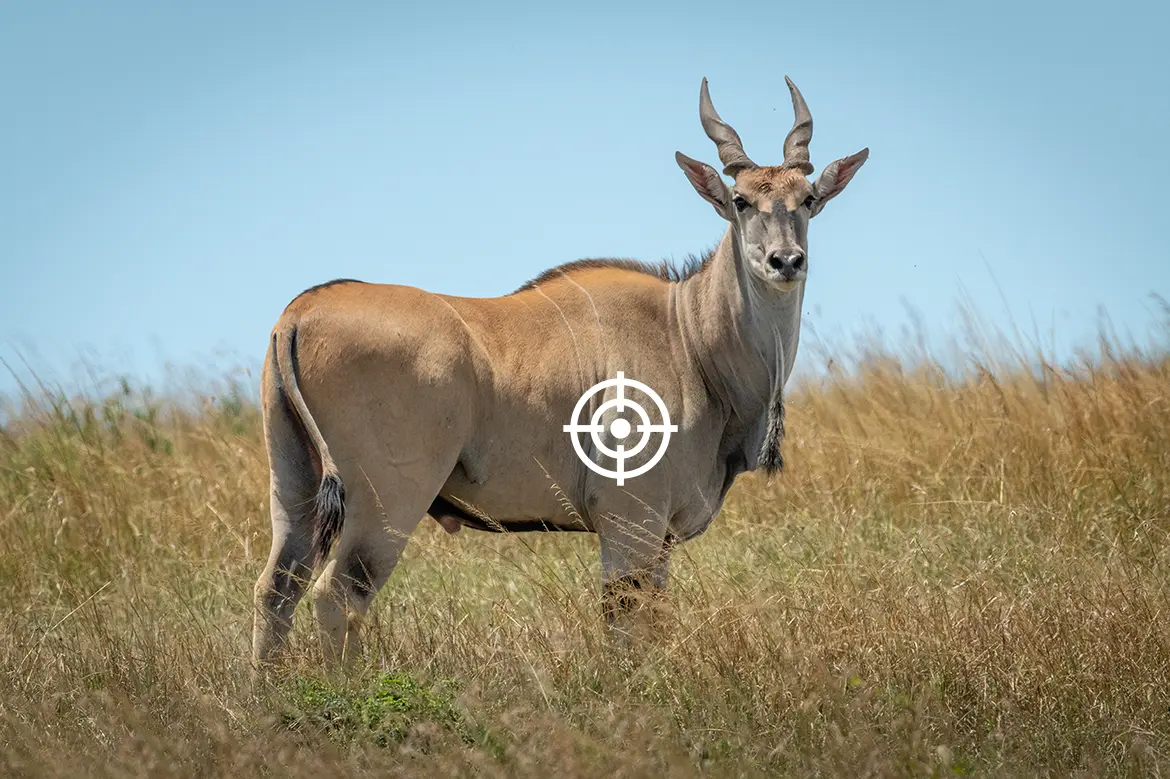
On a broadside presentation, aim directly behind the front shoulder, one-third of the way up from the brisket. This places the bullet squarely through both lungs and, if slightly forward, through the top of the heart. Do not aim too high — a common mistake with large-bodied animals. The heart sits low in the chest, and a shot through the centre of the lungs will anchor an eland far more reliably than one placed high through the shoulder blade.
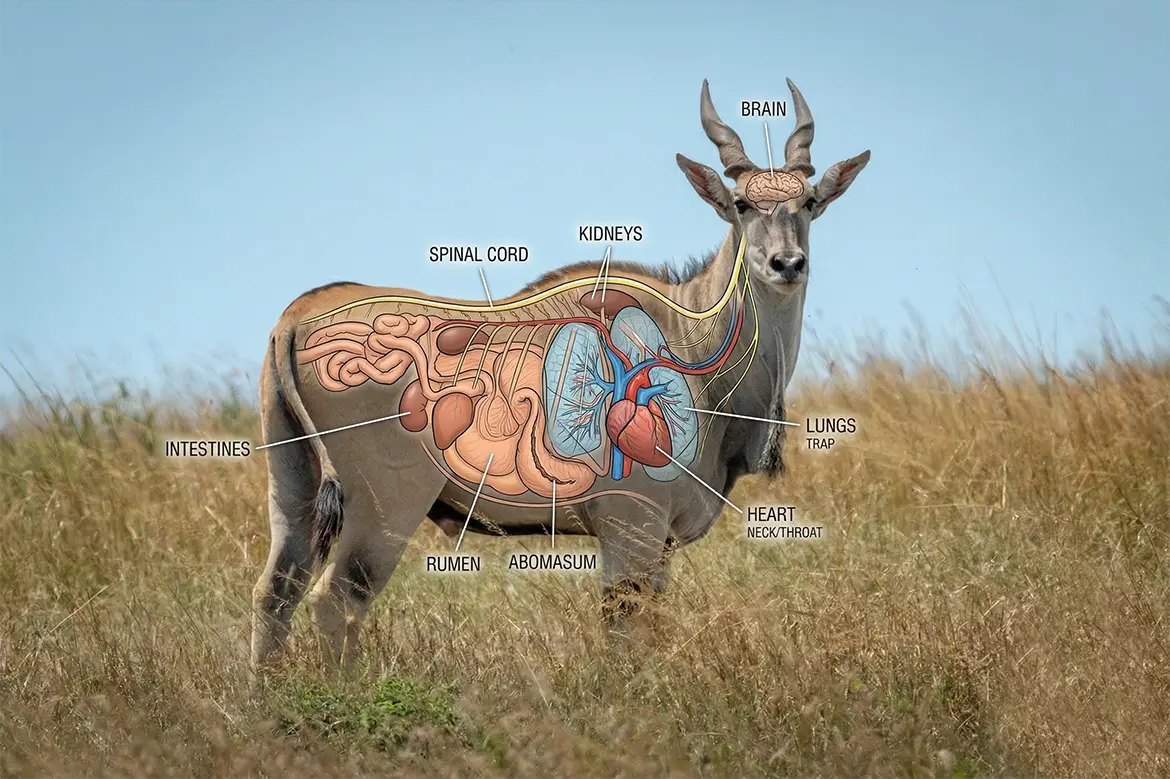
On a quartering-away presentation, aim for the opposite shoulder, sending the bullet through the full length of the chest cavity. For large bulls, a shoulder shot using a heavy-caliber rifle (.375 H&H with a 300-grain solid or bonded bullet) can break the shoulder and disable the animal immediately, though this sacrifices some meat. Always follow up quickly if the animal does not drop — eland are capable of covering remarkable distances even when fatally wounded, and a prompt second shot can save hours of tracking.
What’s Included
An eland hunting package with Gaspare Spanio Safaris typically includes:
- Dedicated professional hunter and experienced tracking team
- Full-board lodge accommodation on the 3,000-hectare private game farm
- All meals — hearty breakfasts, packed field lunches, and evening dinners featuring local game cuisine
- 4×4 hunting vehicles and fuel for all in-field transportation
- Field preparation of your trophy, including skinning and salting
- Cold storage and coordination with your chosen taxidermist
- Rifle permit assistance and temporary firearm import documentation
- Airport transfers from Polokwane or Johannesburg
- Laundry service, beverages, and daily lodge housekeeping
Trophy fees for eland, taxidermy, dipping and packing, shipping, and gratuities are quoted separately. Due to the eland’s status as a premium trophy, the trophy fee is higher than most plains game species — discuss pricing with your outfitter during the booking process.
Frequently Asked Questions
How many days should I allow for an eland hunt?
A dedicated eland hunt typically requires 5-7 hunting days, though animals can sometimes be located within the first day or two. Eland are nomadic and can cover large distances, so building in extra time is wise. Most hunters combine eland with other species to make the most of their safari — your PH will manage the schedule to maximise your chances on all target animals.
Is eland meat good to eat?
Eland is widely considered the finest-tasting game meat in Africa. The flesh is tender, rich, and slightly sweet, with a fine grain that is comparable to premium beef. Eland steaks, biltong, and droewors are prized delicacies in South Africa. Your lodge will almost certainly prepare eland for dinner during your stay if one is harvested.
Why is eland hunting so challenging despite the animal’s size?
Despite weighing up to 900 kg, eland are remarkably wary animals with excellent eyesight and a strong flight instinct. They tend to feed in areas with good all-round visibility, making undetected approaches difficult. They are also nomadic and may move several kilometres overnight, meaning a herd that was in one area yesterday may be kilometres away today. Their combination of alertness, mobility, and preference for open terrain makes them far more difficult to hunt than their size would suggest.
What is the minimum caliber for eland?
The .30-06 Springfield loaded with premium 180-grain or 200-grain bullets is considered the practical minimum for eland. However, most experienced hunters and professional guides recommend the .300 Winchester Magnum or .375 H&H Magnum for large bulls. The eland’s massive body requires deep penetration through heavy muscle and bone, and there is no substitute for adequate caliber and bullet construction when hunting Africa’s largest antelope.
Can I hunt eland with a bow?
Yes, eland can be taken with a compound bow, though it is one of the most demanding bow hunts in Africa. A draw weight of 70 pounds or more is recommended, with heavy arrows and fixed-blade broadheads designed for maximum penetration. Waterhole blinds offer the best opportunity for bow hunters. Be prepared for a potential tracking job of several hundred metres even with a well-placed shot, as the eland’s enormous body and stamina can carry it a considerable distance before expiring.
The eland stands alone as Africa’s largest and most impressive antelope, and taking a mature bull is an achievement that ranks among the finest in any hunter’s career. Contact Gaspare Spanio Safaris to begin planning your eland hunting South Africa adventure. Our team in Limpopo will ensure you have every advantage in pursuing this iconic trophy. Visit gasparespaniosafaris.co.za to enquire about availability and pricing.
Related Hunts
Hunters who pursue Eland also enjoy these species:
- Kudu Hunting South Africa
- Gemsbok Hunting South Africa
- Sable Antelope Hunting South Africa
- Roan Antelope Hunting South Africa
View all huntable species at Gaspare Spanio Safaris.

