


About the Black Impala
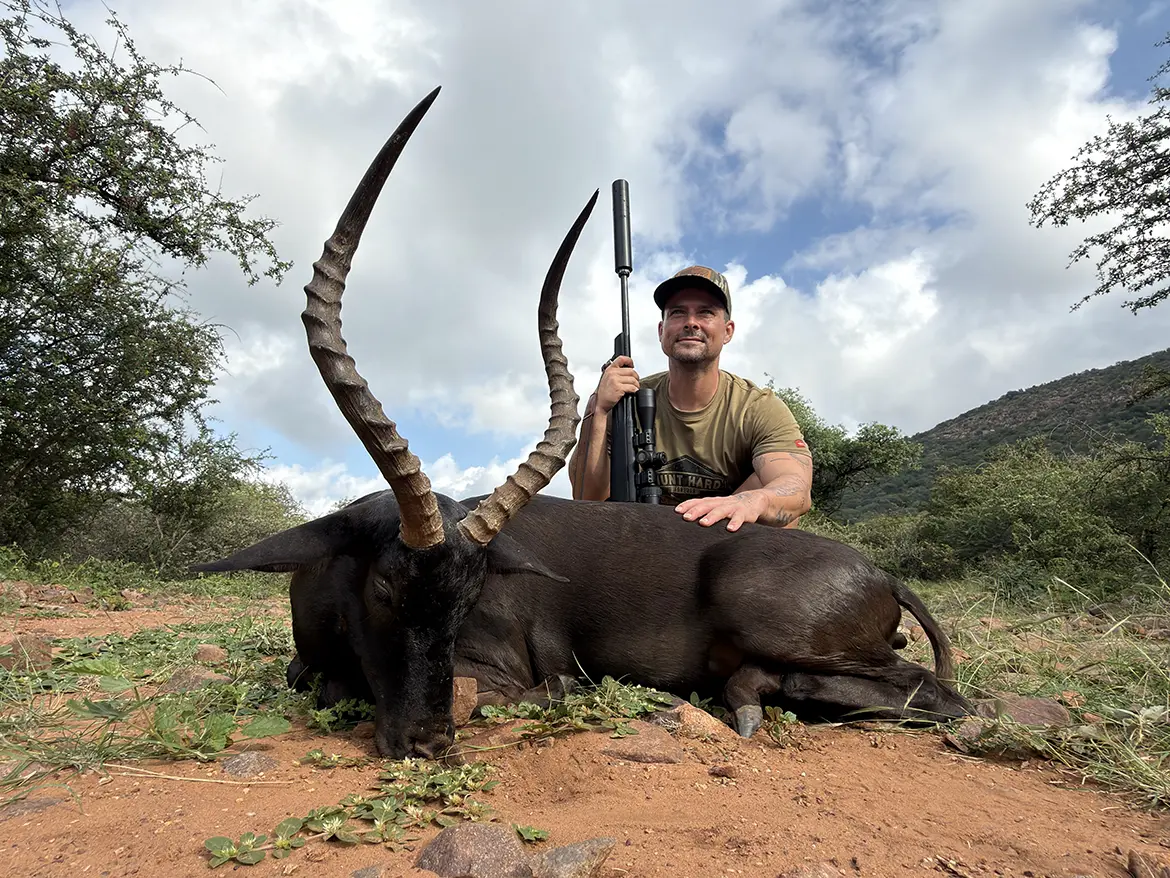
The black impala is a melanistic colour variant of the common impala (Aepyceros melampus). The melanistic gene produces a coat that ranges from deep chocolate brown to near-black across the entire body, replacing the typical golden-brown and white colouration of the common impala. Some individuals display a slight reddish or dark brown hue in certain light conditions, but the overall impression is of a dramatically dark animal that stands out strikingly in the African bush.
In all other respects, black impala are identical to common impala. Rams weigh between 40 and 76 kilograms and stand approximately 75 to 95 centimetres at the shoulder. They carry the same beautiful lyre-shaped horns that make the common impala such a popular trophy — ridged for the lower two-thirds, smooth and pointed at the tips, and ideally measuring 55 centimetres or more on a mature ram.
Black impala were first selectively bred from naturally occurring melanistic individuals in the early 2000s. They are now established on numerous private game reserves but remain far less common than standard impala. Their rarity makes them a premium trophy species, and their dramatic appearance makes them one of the most visually impressive colour variants available.
Black Impala Hunting Methods
Black impala are hunted using the same proven methods as common impala:
- Spot and stalk: The primary method. Impala herds or bachelor groups are located, a suitable ram is identified, and a careful stalk is planned. The black coat actually makes identification easier than with common impala — the dark animal is usually conspicuous within a mixed herd or against the golden grass of the bushveld.
- Ambush at water: Impala drink daily and visit water sources regularly, particularly during the hotter months. Setting up near a water point provides close-range opportunities with time for careful trophy assessment.
- Walk and stalk: Walking slowly through impala habitat — open woodland with mixed bush and grassland — produces encounters with feeding and resting herds. A careful approach to within 80 to 150 metres is usually possible with patience.
Impala are alert, skittish animals with excellent eyesight and hearing. They are also extremely fast, capable of leaping 3 metres high and 10 metres in a single bound. Once alarmed, a herd can vanish in seconds. Your professional hunter at Gaspare Spanio Safaris will manage the approach to maximise your chances of a successful shot.
What Is a Trophy Black Impala? — Record Book Standards
A black impala trophy is evaluated by both horn measurements and coat quality. Horn measurement follows the same standards as common impala — measured along the front curve from base to tip. A good trophy ram will have horns measuring 55 centimetres or more, with good ridging, width, and a classic lyre shape. However, the striking dark coat is the primary reason most hunters pursue the black impala.
Shoulder mounts are overwhelmingly the most popular option. A black impala shoulder mount displayed alongside a common impala creates one of the most dramatic contrasts in any trophy room. Full-body mounts are also stunning and display the complete dark colouration to full effect. The visual impact of a black impala mount is consistently one of the most admired pieces in a hunter’s collection.
Black impala are measured by the same horn standards as common impala. The Rowland Ward minimum is 23⅝ inches; the world record stands at 31⅜ inches. The SCI minimum is 57 inches combined (both horns); the SCI world record for common impala is 115 points. Trophy books may list black impala as a separate colour variant category. Horn symmetry and mass add considerably to the display value.
Current black impala trophy fees are listed on our South Africa Trophy Price List. Black impala carry a significant premium over common impala due to their rarity as a managed colour variant.
Black Impala Shot Placement — Vital Zone & String Jump
Shot placement on a black impala is identical to the common impala. For a visual overview of shot placement across all species, see our South Africa Shot Placement Guide. The recommended aiming point is behind the front shoulder, one-third of the way up from the belly line, placing the bullet through the heart and lungs. Impala are not particularly tough animals, and a well-placed shot will result in a clean, quick kill.
The challenge is often the distance — impala are wary and may not allow an approach closer than 100 to 150 metres. A flat-shooting caliber and a steady rest are important. Recommended calibers range from .243 Winchester through .30-06 Springfield, with the .270 Winchester being a popular and effective choice. Even a .308 is perfectly adequate. Use quality expanding ammunition for reliable terminal performance.
Best Time to Hunt Black Impala in South Africa
Black impala can be hunted year-round on Limpopo’s private game reserves. The optimal season is the dry winter from May through September:
- Visibility: Reduced foliage makes spotting impala herds much easier in the open woodland they prefer.
- Coat condition: Winter coats are in prime condition — the deep black colouration is most vivid during the cooler months.
- Herd behaviour: During the dry season, herds are more predictable in their movements, concentrating around permanent water sources and established feeding areas.
- Rut (April–June): Impala rams are most active and visible during the rut, when dominant rams patrol territories and engage with rivals — providing excellent trophy assessment opportunities.
Black impala hunting is most commonly combined with common impala, kudu, and warthog for a well-rounded Limpopo plains game safari. Browse our hunting packages for multi-species options.
Frequently Asked Questions
Why are black impala so much more expensive than common impala?
Black impala carry a significant premium because they are far rarer than common impala. The melanistic gene is recessive, requiring specific breeding management to produce consistently dark offspring. The cost of acquiring, managing, and maintaining black impala herds on private reserves is considerable. While a common impala may cost a few hundred dollars in trophy fees, a black impala can be many times that amount — reflecting its rarity and the breeding investment behind it. At Gaspare Spanio Safaris, we ensure you receive a quality trophy animal worth the premium.
Is the black impala a separate species?
No. The black impala is the same species as the common impala (Aepyceros melampus). The dark coat is a naturally occurring genetic variation caused by melanism — an increased production of dark pigment. In size, behaviour, diet, and every other characteristic, black impala are identical to common impala. Record books typically list them as a separate trophy category.
Can I hunt both black and common impala on the same safari?
Absolutely, and we highly recommend it. Taking a common impala and a black impala on the same safari at Gaspare Spanio Safaris creates a stunning pair for display. The visual contrast between the golden common impala and the dark black impala side by side is remarkable. Common impala are abundant on our property, so combining both is straightforward and makes excellent use of your hunting time.
Hunters who pursue Black Impala also enjoy these species:
- Impala Hunting South Africa
- Golden Wildebeest Hunting South Africa
- Springbok Hunting South Africa
- Nyala Hunting South Africa
View all huntable species at Gaspare Spanio Safaris.
Add one of South Africa’s most visually striking trophy animals to your collection. Contact Gaspare Spanio Safaris to book a black impala hunt in Limpopo — a rare and prestigious trophy that will be an immediate focal point in any trophy room.
Where to Hunt Black Impala in South Africa
The black impala is a selectively bred melanistic colour variant found exclusively on private game farms and ranches across South Africa. Unlike the common impala — which roams freely across national parks and communal land — the black impala exists only within managed, privately owned properties where dedicated breeding programmes have established sustainable huntable populations. Gaspare Spanio Safaris maintains a breeding population of black impala on our 3,000-hectare Limpopo concession, ensuring that visiting hunters have a genuine opportunity to take this extraordinary trophy without travelling between multiple properties.
The black impala thrives in the same mixed bushveld and open savannah habitat preferred by the common impala. On our concession, they are found in the ecotone zones between mopane woodland and open grassland — terrain that allows them to utilise shade during the heat of the day while feeding in open areas in the early morning and late afternoon. The dramatic contrast of a jet-black impala against the golden dry-season grass of the Limpopo bushveld is a sight that stays with any hunter who has witnessed it.
What Is Included in Your Black Impala Hunt
All hunts at Gaspare Spanio Safaris are conducted on a fully guided, all-inclusive basis. Your black impala hunt includes:
- Daily rate covering professional hunter, game vehicle, tracker, and all field staff
- Full-board accommodation at our exclusive lodge — three meals daily, snacks, and beverages including a free bar
- Return airport transfers from OR Tambo International Airport (Johannesburg)
- Field preparation of your trophy — skinning, salting, and initial preparation for taxidermy
- Hunting licence and all standard permit fees
- All in-field equipment including shooting sticks, range finder, and first aid
The black impala trophy fee is charged separately and is payable at the conclusion of your hunt. Trophy fees are only charged for animals taken — you pay for results, not attempts. Taxidermy, dip and pack, and international shipping are arranged through our recommended taxidermist and quoted separately. See our trophy price list for current fees, or view our hunting packages for all-inclusive multi-species combinations.
Related Hunts
Hunters pursuing the black impala often combine this trophy with other species on our concession. Popular combinations include:
- Common Impala — the standard impala makes a striking companion piece to the melanistic variant, showing the remarkable contrast between the two colour forms
- Golden Wildebeest — another premium colour variant, ideal for hunters building a collection of rare South African trophy animals
- Springbok — available in four colour variants including black and white, complementing a colour-variant themed safari
- Kudu — the grey ghost of the bushveld and one of South Africa most sought-after plains game trophies
- Nyala — a handsome, shaggy-coated antelope that pairs beautifully with the dramatic black impala on any trophy wall
Contact Gaspare Spanio Safaris to discuss a custom multi-species package tailored to your wish list and available hunting days.

