


About the Impala
The impala (Aepyceros melampus) is the most commonly hunted antelope in Africa, and for good reason. These medium-sized antelope are elegant, alert, and provide a genuine challenge in the field despite their abundance. A mature ram stands roughly 90 cm at the shoulder and weighs between 50 and 65 kg, with a rich reddish-brown coat, lighter flanks, and distinctive black markings on the rump and tail.
Impala are gregarious animals, typically found in breeding herds of 15 to 50 individuals led by a dominant ram during the rutting season. Bachelor herds of younger and displaced males are also common. Their social structure means you will often encounter large numbers, but getting within ethical shooting range of a mature ram requires patience and skill. Impala have exceptional eyesight, acute hearing, and a nervous disposition — they can clear three metres in a single bound and change direction mid-air when startled.
Their preferred habitat is the transitional zone between open grassland and dense woodland, which is precisely the landscape found throughout the Limpopo bushveld. They favour areas near water and are seldom found far from a reliable drinking point, a behavioural trait that bow hunters exploit to great effect.
Two subspecies are recognised on the African continent. The common impala is the variety found across southern and eastern Africa and is the species you will encounter on safari in South Africa. The black-faced impala is a rarer subspecies native to Namibia and parts of Angola, distinguished by a prominent dark blaze on the face and darker overall colouration. For the purposes of this guide, we focus on common impala hunting in South Africa, which represents the vast majority of impala trophies taken each year.
Hunting Methods
One of the reasons the impala is so popular among visiting hunters is the variety of methods that can be employed. From traditional rifle hunting on foot to patient ambush hunts from a blind, there is an approach to suit every preference and skill level.
Rifle Hunting
Rifle hunting for impala is the most straightforward method and the one most first-time safari hunters will choose. Shots are typically taken at ranges between 80 and 200 metres, though closer opportunities regularly present themselves in thicker bush. A flat-shooting, moderate-calibre rifle is ideal. The .243 Winchester is the minimum we recommend and is perfectly adequate with a quality controlled-expansion bullet. The .270 Winchester and .308 Winchester are both excellent choices that offer a good balance of trajectory, energy, and manageable recoil. There is no need for a heavy magnum — impala are not tough animals, and precise bullet placement matters far more than raw power.
A good-quality variable scope in the 3-9x or 2.5-10x range is sufficient for all conditions you will encounter in the Limpopo bushveld. Shooting sticks are used almost universally on foot safaris in South Africa and your professional hunter will carry them at all times.
Bow Hunting
Impala are arguably the single best species in Africa for bow hunting. Their dependence on daily water, predictable movement patterns, and relatively small body size make them ideally suited to ambush-style archery. Most bow-killed impala in South Africa are taken from purpose-built blinds set over waterholes or along established trails, with shot distances typically between 15 and 30 metres.
A compound bow with a draw weight of at least 60 pounds is recommended, paired with sharp fixed-blade or mechanical broadheads. Arrow speed and broadhead sharpness are more important than draw weight alone — a well-placed arrow from a 60-pound bow will achieve full pass-through on an impala. Many experienced bow hunters consider an impala ram one of the most satisfying trophies to take with archery equipment, and it is an outstanding species on which to earn your first bow-hunting African trophy.
Walk and Stalk
Walk-and-stalk hunting is the classic method of pursuing impala with a rifle. You and your professional hunter will move quietly through the bush, glassing herds from a distance and using terrain, vegetation, and wind direction to close the gap. This is physically engaging hunting that rewards fitness, patience, and the ability to shoot accurately from field positions. In the broken mopane and combretum woodland of Limpopo, stalks of 30 to 45 minutes are common before a shot opportunity presents itself.
The key to a successful stalk on impala is wind discipline. These antelope may tolerate a degree of movement at distance, but a single whiff of human scent will send the entire herd bounding away in seconds. Your professional hunter will constantly monitor wind direction and plan the approach accordingly.
Blind Hunting
Hunting from a blind — whether a permanent structure or a natural hide built from brush — is highly effective for impala, particularly during the drier winter months when animals concentrate around remaining water sources. Blinds positioned at waterholes offer predictable, close-range encounters and are an excellent option for hunters who prefer a more stationary approach or who are combining their impala hunt with bow-hunting opportunities. At Gaspare Spanio Safaris, we maintain several well-positioned blinds across the property that see regular impala activity throughout the season.
Where to Hunt Impala in South Africa
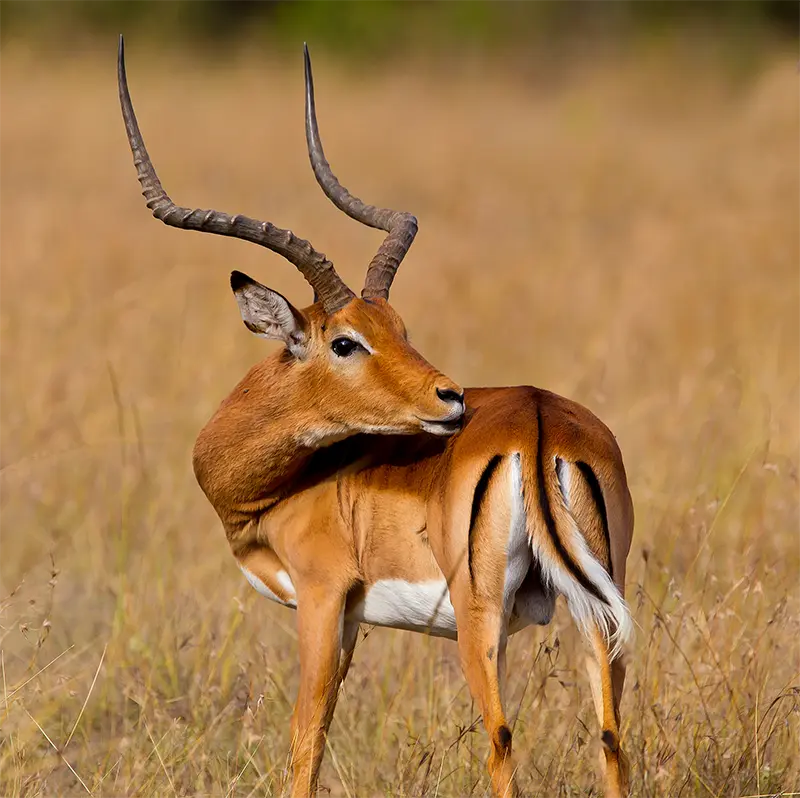
Impala are found across much of South Africa’s bushveld regions, but the heartland of impala hunting is undoubtedly the Limpopo Province. The warm, semi-arid lowveld and bushveld biomes of Limpopo provide ideal habitat — mixed woodland interspersed with open grassland, seasonal rivers, and reliable water points. Population densities here are among the highest anywhere in the species’ range.
The broader Waterberg and Limpopo River basin areas are home to hundreds of private game farms and conservancies that manage healthy impala populations. On our property at Gaspare Spanio Safaris, impala are the most commonly sighted antelope species, and hunters can expect to encounter multiple herds during any day in the field. The combination of thick jesse bush, open vlei areas, and well-distributed water sources across our 3,000 hectares creates a mosaic of habitat that supports strong numbers of mature rams year after year.
Other provinces where impala hunting is available include Mpumalanga, the North West, and KwaZulu-Natal, though Limpopo remains the destination of choice for the majority of international hunters pursuing impala in South Africa.
Best Time to Hunt Impala
Impala can be hunted year-round in South Africa, and there is no closed season on private land in Limpopo. However, the quality of the experience varies considerably depending on the time of year.
The rutting season in May is widely considered the prime time for impala hunting. During the rut, dominant rams are focused almost entirely on herding and defending their harems. They become noticeably less cautious, vocalising frequently with their distinctive roaring grunts and spending less time scanning for danger. This behavioural shift makes them significantly more approachable, and the constant movement associated with breeding activity means encounters are frequent. If your primary goal is a trophy impala ram, timing your safari for the rut gives you a clear advantage.
The broader dry season from April through September is excellent for hunting in general. Vegetation thins out as grasses dry and leaves fall, dramatically improving visibility in the bush. Animals also concentrate around permanent water sources, making them easier to locate and pattern. Daytime temperatures during the winter months are pleasant — typically 20 to 25°C — making for comfortable conditions on foot.
The wet season from October through March brings lush vegetation and dispersed water, which makes spotting and stalking more difficult. However, impala can still be taken during this period, particularly in areas with maintained blinds and established feeding routes.
What Is a Trophy Impala? — Rowland Ward & SCI Standards
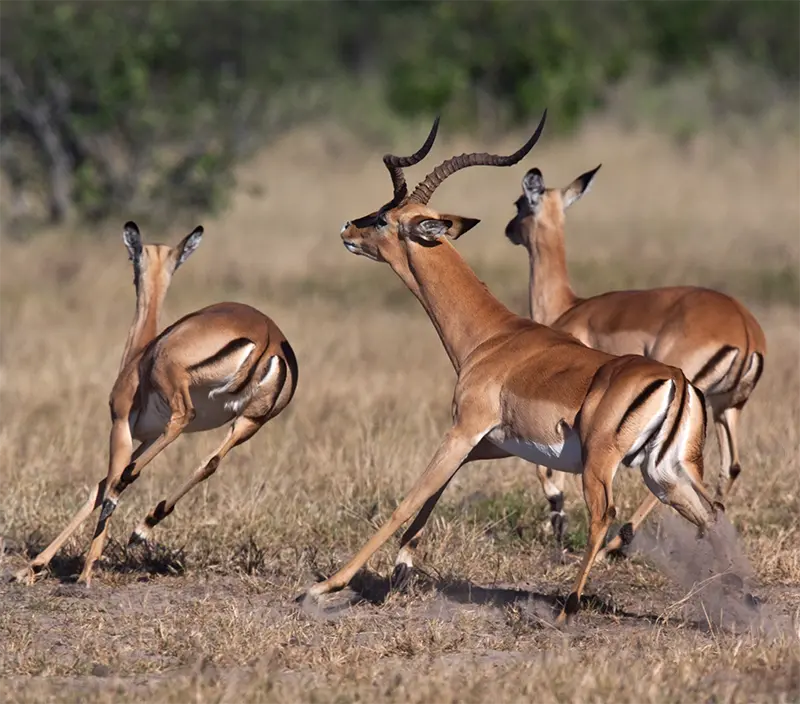
A mature impala ram carries a set of graceful, lyre-shaped horns that sweep upward and outward before curving back inward at the tips. The horns are ridged along most of their length, with smooth, polished tips. Both horn length and symmetry are important factors in trophy evaluation.
The Safari Club International (SCI) minimum for common impala is 54 inches combined (both horns measured along the outer curve and added together). The Rowland Ward minimum is 23⅝ inches (60 cm) measured on the longer horn. The Rowland Ward world record stands at 31⅜ inches. The SCI world record is 115 points. A ram carrying horns of 22 inches or more is a respectable trophy; anything over 25 inches is outstanding and will typically score well above the Rowland Ward minimum.
When evaluating a ram in the field, your professional hunter will assess several features. Horn length is obviously the primary consideration, but look also for good mass at the bases, deep and well-defined ridges, and tips that extend well above the ear tips when the animal is facing you. A ram whose horn tips reach significantly above the ear tips is almost certainly a shooter. The best trophies will also display a wide spread, with the horns sweeping well out to the sides before curving inward.
Age is a factor as well. A fully mature ram of five to seven years will typically carry his best set of horns. Older rams may show worn or broken tips and thinner bases. Your professional hunter will help you identify the difference between a young ram still growing and a mature animal carrying his best headgear.
Current impala trophy fees — including combination package rates — are listed on our South Africa Trophy Price List.
Impala Shot Placement — String Jump & Vital Zone
Impala are not physically tough animals, but they are fast. For a visual overview of shot placement across all species, see our South Africa Shot Placement Guide. — explosive acceleration and unpredictable direction changes mean that a poorly placed first shot rarely gets a second chance. Precise shot placement is therefore critical, and patience in waiting for the right presentation will save you a long tracking exercise in thick bush.
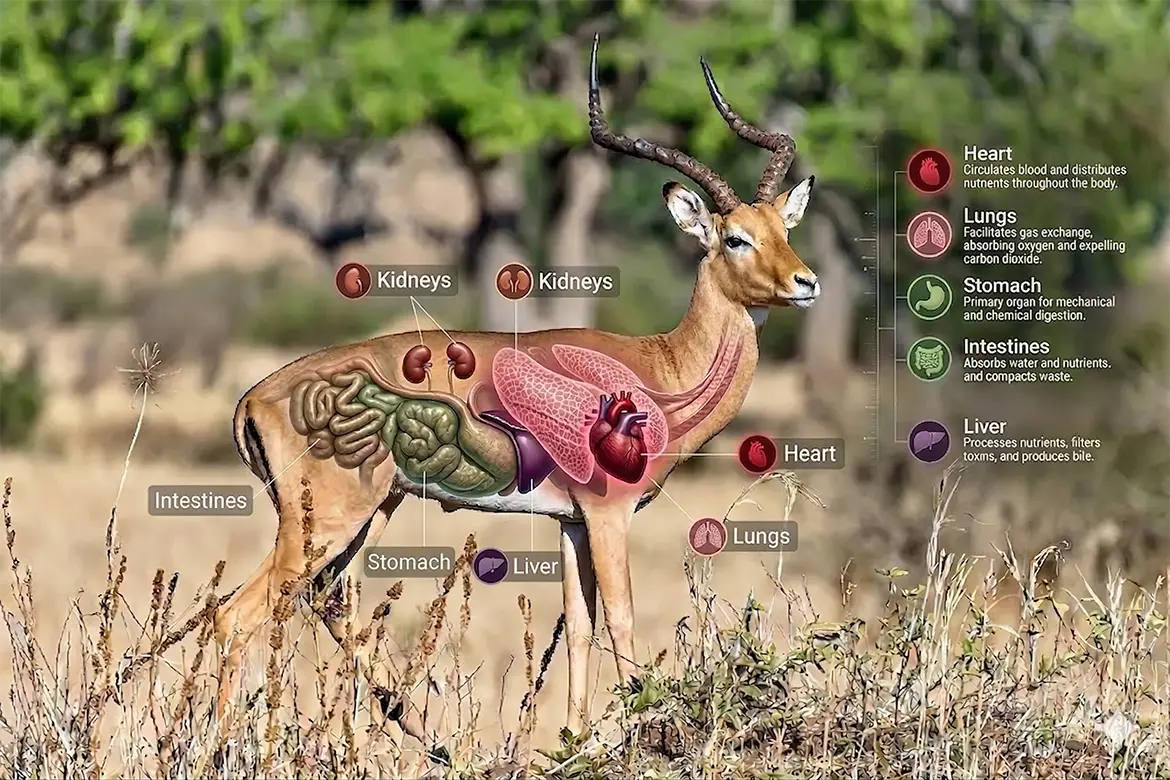
The broadside shot is the gold standard. Place your crosshairs or pin directly behind the crease of the front leg, roughly one-third of the way up from the bottom of the chest. This targets the heart and both lungs simultaneously and will result in a quick, clean kill. The vital zone on a broadside impala is roughly the size of a dinner plate — not small, but not generous either when adrenaline is flowing.

A quartering-away presentation is also acceptable. Aim for the off-side shoulder, placing the shot further back on the near side to allow the bullet or arrow to travel diagonally through the vitals. Avoid quartering-on shots with a bow, as the shoulder blade can deflect a broadhead.
For bow hunters, the slightly lower aiming point is important. Impala have a well-documented tendency to “jump the string” — reacting to the sound of the bow by dropping sharply before the arrow arrives. Aiming at the bottom third of the chest or even just above the heart compensates for this reaction at typical blind distances. Wait for the animal to be relaxed, ideally with its head down drinking, before releasing your arrow.
With a rifle, never take a running shot at impala. They are simply too fast and too erratic. Wait for the animal to stop, settle your crosshairs, and squeeze the trigger only when you are confident of a clean kill.
What’s Included in Your Impala Hunt
The impala is one of the most affordable trophy species available in South Africa, making it an outstanding choice for hunters on a budget or those looking to add extra trophies to a safari package. Trophy fees for impala are among the lowest of any huntable antelope, and the species is frequently included in combination packages alongside kudu, warthog, blue wildebeest, and other popular plains game.
For first-time African hunters, impala is often the natural starting point — and frequently the first animal taken on safari. The combination of availability, affordability, and genuine hunting challenge makes it an ideal confidence-builder early in a safari before moving on to larger or more expensive species.
A typical impala hunting package at Gaspare Spanio Safaris includes:
- Daily rates with full-board accommodation on the farm
- Services of an experienced professional hunter and tracker
- Field preparation of your trophy for the taxidermist
- Transport to and from the hunting areas on the property
- All meals, refreshments, and sundry drinks during your stay
- Skinning, salting, and dipping of trophies
We also offer multi-species combination packages where impala is bundled with other sought-after Limpopo species at a reduced overall rate. Whether you are hunting for a single day or spending a full week pursuing several trophies, we will tailor an itinerary that makes the most of your time in the field.
Frequently Asked Questions
Is impala a good first African trophy?
Absolutely. Impala is widely regarded as the ideal first African trophy. They are abundant, affordable, and provide a genuine hunting challenge without requiring extreme physical fitness or specialised equipment. Many seasoned African hunters took their first impala early in their safari career and still regard it as one of their most memorable trophies.
What calibre rifle should I bring for impala?
A .243 Winchester is the minimum recommended calibre. The .270 Winchester and .308 Winchester are both excellent all-round choices that will also handle larger plains game if you are hunting a combination package. Use a premium controlled-expansion bullet weighing between 130 and 165 grains depending on the calibre.
Can I hunt impala with a bow?
Yes, and impala is one of the best species in Africa for bow hunting. Most bow-hunted impala are taken from blinds set over water at ranges of 15 to 30 metres. A compound bow with a minimum draw weight of 60 pounds and sharp broadheads is recommended. Crossbows are also permitted on private land in Limpopo.
How much does an impala trophy fee cost?
Impala carry one of the lowest trophy fees of any huntable antelope in South Africa. Exact pricing varies by season and package, so please contact us directly for a current quote. We also offer discounted rates when impala is included in a multi-species combination package.
What is the best month to hunt impala?
May is considered the best single month, as it coincides with the rutting season when rams are less cautious and more active during daylight hours. The broader dry season from April through September is also excellent. However, impala can be hunted successfully at any time of year on private land in Limpopo.
How do I get my impala trophy home?
We handle all field preparation, skinning, salting, and dipping of your trophies on the farm. Once your safari is complete, we coordinate with a reputable taxidermist and shipping agent who will arrange export permits, veterinary inspections, and international freight to your home country. The process typically takes four to eight months depending on the destination.
Related Hunts
Hunters who pursue Impala also enjoy these species:
- Springbok Hunting South Africa
- Blesbok Hunting South Africa
- Warthog Hunting South Africa
- Black Impala Hunting South Africa
View all huntable species at Gaspare Spanio Safaris.
Ready to book your impala hunting safari in South Africa? Contact Gaspare Spanio Safaris today to discuss available dates, combination packages, and everything you need to plan your trip to Limpopo. Whether it is your first African safari or your tenth, we look forward to welcoming you to our farm and putting you on a trophy ram.

