


About the Animal
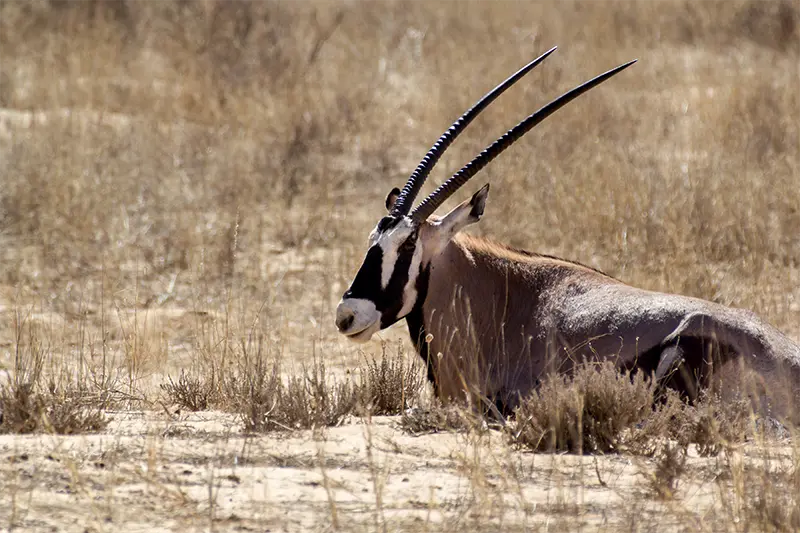
The gemsbok (Oryx gazella) is a large, powerfully built antelope native to the arid and semi-arid regions of southern Africa. Adults stand approximately 120 cm at the shoulder and weigh between 180 and 240 kg, with bulls being noticeably heavier and thicker in the neck than cows. Both sexes carry long, straight or slightly curved horns that can exceed 40 inches in length, making sex identification at a distance one of the key challenges of the hunt.
The gemsbok’s most recognisable feature is its bold black-and-white facial pattern, complemented by a black dorsal stripe and black patches on the flanks and upper legs. The body is predominantly grey-fawn, blending effectively with dry bushveld terrain. Originally adapted to survive in the Kalahari Desert, the gemsbok is remarkably tough and can endure extreme temperatures and limited water. This hardiness extends to the hunting field — a poorly placed shot on a gemsbok can lead to a long and difficult tracking exercise.
Gemsbok are predominantly grazers, feeding on grasses, supplemented by wild melons, tubers, and browse during the dry season. They are gregarious animals, typically found in herds of 10 to 40 individuals, though older bulls may be encountered alone or in small bachelor groups. Their eyesight is excellent, and they are alert to danger, making the approach a critical element of any successful hunt.
Hunting Methods
Rifle Hunting
Rifle hunting is the most popular and effective method for taking gemsbok in the Limpopo bushveld. The standard approach involves driving slowly through the property at first light, glassing open clearings and feeding areas for herds. Once a suitable bull has been identified, the stalk begins on foot. Shots typically present at distances between 100 and 250 metres, though the thick bushveld can occasionally offer closer opportunities. A sturdy set of shooting sticks is essential, and your professional hunter will carry them at all times.
For caliber selection, a .30-06 Springfield loaded with 180-grain premium bonded or monolithic bullets is the absolute minimum recommended for gemsbok. The preferred choice is the .300 Winchester Magnum or similar magnum cartridge, as the gemsbok’s tough hide, heavy muscle mass, and dense bone structure demand deep penetration. Cartridges such as the .338 Winchester Magnum and 9.3x62mm are also excellent options. Avoid light, rapidly expanding bullets — they often fail to reach the vitals on a quartering shot.
Bow Hunting
Bow hunting gemsbok is a thrilling but demanding pursuit. The most productive method is hunting from a well-positioned ground blind set over a water source during the dry winter months, when gemsbok must drink regularly. A minimum draw weight of 70 pounds is recommended, paired with heavy, fixed-blade broadheads of at least 100 grains. Total arrow weight should be 450 grains or above to ensure adequate penetration through the gemsbok’s thick skin and heavy shoulder bones. Shot distances from blinds typically range from 15 to 30 metres, and patience is paramount — you may sit for many hours before the right bull presents a broadside opportunity.
Walk and Stalk
The walk-and-stalk method is the most physically engaging way to hunt gemsbok. Your professional hunter will lead you on foot through the bushveld, using wind direction, natural cover, and terrain features to close the distance on a herd. This method requires a reasonable level of fitness, as you may walk 10 to 15 kilometres in a day across uneven terrain. The reward is an intensely personal hunting experience that connects you directly with the landscape and the animal. Mornings and late afternoons are the most productive periods, as gemsbok tend to rest in shade during the midday heat.

Where to Hunt
Limpopo Province in the far north of South Africa is one of the premier destinations for gemsbok hunting South Africa. The region’s mix of open grasslands, scattered thorn bush, and mopane woodland provides ideal habitat for gemsbok and a variety of other plains game species. Gaspare Spanio Safaris’ 3,000-hectare private concession offers a managed, low-pressure environment where gemsbok populations are carefully maintained to produce quality trophies year after year. The property’s varied terrain — from open flats to rocky ridgelines — provides diverse hunting conditions and ensures that no two stalks are the same. Being a private game farm, you will hunt without competition from other outfitters or public-access hunters, giving you the time and space to select the right bull.
Best Time to Hunt
Gemsbok can be hunted year-round in Limpopo, but the optimal period falls between May and September, during the South African winter. The dry season thins out the vegetation, significantly improving visibility and making it easier to spot and approach gemsbok herds. Cooler temperatures make for more comfortable hunting conditions and encourage game to be active for longer periods during the day. The lack of surface water during the driest months — typically July through September — concentrates animals at known water points, which is especially advantageous for bow hunters using blinds. The green summer months from November to March offer their own appeal, with lush scenery and newborn animals, but the thick foliage makes spotting and stalking considerably more difficult.
What Is a Trophy Gemsbok? — Rowland Ward & SCI Standards
The gemsbok trophy is judged primarily on horn length, symmetry, and overall mass. Both sexes carry horns, but bulls generally have shorter, thicker horns with a wider base circumference, while cows tend to have longer, thinner, and more gracefully curved horns. For record-book purposes, the bull is traditionally the preferred trophy, though exceptional cows are also highly prized.
- SCI minimum entry score: 91 inches (combined length of both horns)
- Rowland Ward minimum entry: 40 inches (single longest horn)
- Rowland Ward world record: 47⅛ inches — taken in South Africa
- SCI world record: 185⅛ points
A mature bull with horns measuring 36 to 38 inches is an excellent representative trophy. Animals exceeding 40 inches are exceptional and highly coveted. Your professional hunter will take time to evaluate horn length, base thickness, and symmetry before recommending a shot. In the field, horn length can be estimated by comparing it to the distance from the base of the horn to the tip of the nose — a horn that clearly extends beyond the nose tip is likely a solid trophy.
Current gemsbok trophy fees are listed on our South Africa Trophy Price List.
Gemsbok Shot Placement — Vital Zones & Common Mistakes
Correct shot placement is critical on gemsbok. For a visual overview across all species, see our South Africa Shot Placement Guide. The animal’s heavy musculature and thick hide mean that marginal shots are often non-fatal and can result in a wounded animal that is dangerous to follow up — a gemsbok will readily use its horns in self-defence when cornered.
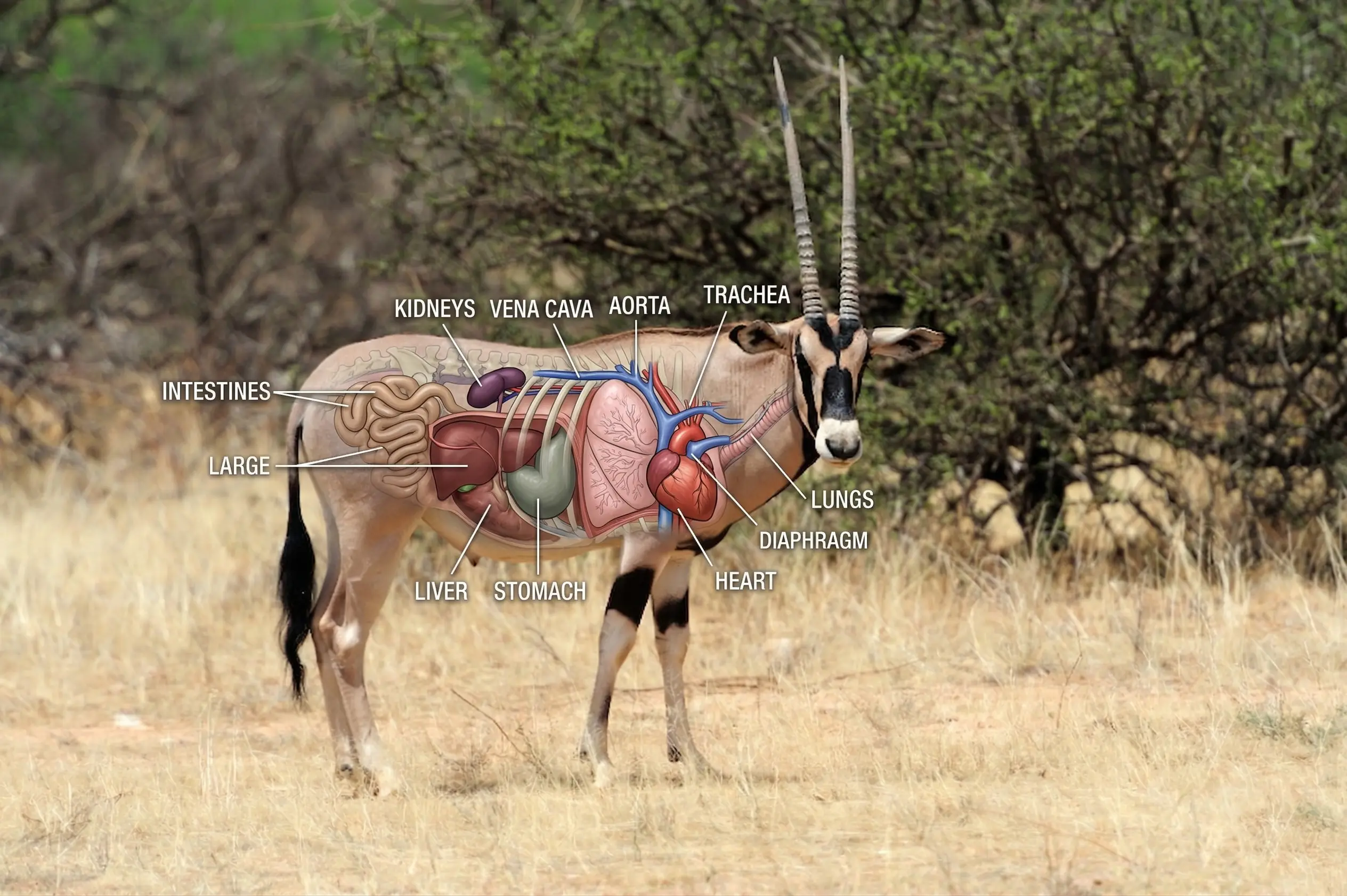
For a broadside shot, place the crosshairs on the centre of the shoulder, approximately one-third of the way up from the bottom of the chest. This targets the heart and lungs directly. A high shoulder shot — placed at the top of the shoulder blade — can anchor a gemsbok instantly by breaking the spine and disrupting the central nervous system, but the margin for error is small.

On a quartering-away shot, aim for the opposite front shoulder, ensuring the bullet passes through the vitals. Avoid frontal shots unless you are using a heavy magnum caliber with deep-penetrating bullets. Never take a quartering-towards shot, as the heavy shoulder bone and muscle mass will likely prevent the bullet from reaching the vitals. When in doubt, wait for a better angle — your professional hunter will advise you on when to take the shot.
What’s Included
When you book a gemsbok hunt with Gaspare Spanio Safaris, your package typically includes:
- Professional hunter (PH) and experienced trackers for the duration of your hunt
- Comfortable lodge accommodation on the private game farm
- All meals and refreshments during your stay, including beverages in the field
- 4×4 hunting vehicle with driver and hunting equipment (shooting sticks, chairs, etc.)
- Field preparation of your trophy, including skinning, salting, and delivery to the taxidermist
- Daily laundry service
- Airport transfers from Polokwane (PTG) or Johannesburg (JNB) by arrangement
Trophy fees, taxidermy, dipping and packing, and export permits are typically charged separately. Rifle hire and ammunition can be arranged if you prefer not to travel with your own firearm. Full details and current pricing are available on request.
Frequently Asked Questions
How do I tell a gemsbok bull from a cow at a distance?
This is one of the most common challenges in gemsbok hunting. Bulls tend to be heavier in the body with a thicker neck and shorter, more robust horns with noticeably thicker bases. Cows are more slender, with longer, thinner horns that often appear more curved. In a herd, the dominant bull will often stand slightly apart or at the rear. Your professional hunter has years of experience judging gemsbok and will guide you in selecting the right animal.
What is the typical shot distance when hunting gemsbok?
In the Limpopo bushveld, most rifle shots on gemsbok are taken between 100 and 250 metres. The terrain varies from open clearings to thicker bush, so it is important to be comfortable shooting from sticks at a variety of distances. Practice at the range before your trip, and always shoot from the steadiest rest available in the field.
Is gemsbok hunting physically demanding?
A gemsbok hunt involves a moderate level of physical activity. You will be walking on uneven terrain, sometimes for several hours at a time, and may need to move quickly when an opportunity presents itself. A reasonable level of general fitness will enhance your experience significantly. That said, your professional hunter will tailor the pace and style of the hunt to your physical capabilities.
Can I combine a gemsbok hunt with other species?
Absolutely. Gemsbok hunting South Africa is frequently combined with other plains game species such as kudu, impala, blue wildebeest, warthog, and zebra. A combination package of five to seven days allows you to pursue multiple species and make the most of your safari. Browse our hunting packages for pre-built multi-species options, or contact us for a custom quote.
What happens to the meat after the hunt?
Gemsbok venison is lean, flavourful, and highly regarded. The meat from your hunt will be processed and can be enjoyed during your stay at the lodge — biltong, steaks, and potjie are all popular preparations. Any surplus meat is distributed to local communities and staff, ensuring nothing goes to waste.
Related Hunts
Hunters who pursue Gemsbok also enjoy these species:
- Kudu Hunting South Africa
- Wildebeest Hunting South Africa
- Sable Antelope Hunting South Africa
- Eland Hunting South Africa
View all huntable species at Gaspare Spanio Safaris.
Ready to pursue one of Africa’s most iconic antelope? Contact Gaspare Spanio Safaris to start planning your gemsbok hunting South Africa adventure. Whether you are looking for a dedicated gemsbok hunt or want to add this magnificent trophy to a multi-species package, we will build a safari tailored to your goals.

