


Bushbuck Hunting South Africa — Your Complete Guide
Bushbuck hunting South Africa is widely regarded as one of the most challenging and rewarding pursuits available to visiting sportsmen. The bushbuck is a shy, solitary antelope that lives deep within dense riverine bush and thick undergrowth, making it exceptionally difficult to locate and approach. Unlike many of Africa’s plains game species that congregate in open grasslands, the bushbuck is a creature of shadow and cover — a ghost that materialises briefly at the edge of a thicket before vanishing without a sound. For hunters who value patience, fieldcraft, and the thrill of outwitting a wary quarry on its home ground, there are few trophies more satisfying than a mature bushbuck ram taken on a fair-chase hunt in the bushveld of Limpopo Province.
About the Animal
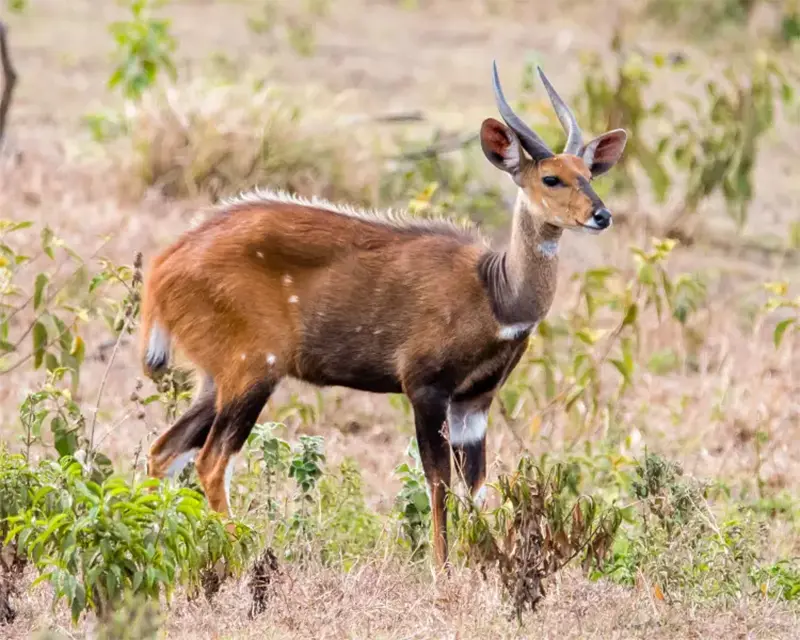
The bushbuck (Tragelaphus scriptus) is a medium-sized antelope belonging to the spiral-horned tribe, which also includes kudu, nyala, and eland. Males stand approximately 80 cm at the shoulder and weigh between 40 and 80 kg, depending on the subspecies and region. Females are smaller and lack horns entirely. The ram’s coat varies from rich chestnut to dark brown, often adorned with white spots and stripes along the flanks and haunches. The spiral horns, present only in males, are relatively short but beautifully formed, twisting in a tight corkscrew pattern that makes them a prized addition to any trophy room.
Bushbuck are predominantly browsers, feeding on leaves, shoots, fruits, and flowers found in the dense vegetation they call home. They are most active during the early morning and late afternoon, though in areas with low hunting pressure they may feed well into the day. Their solitary nature sets them apart from most other antelope — a mature ram is almost always encountered alone or occasionally in the company of a single female. Their senses are razor-sharp, with exceptional hearing and a keen nose that can detect danger from considerable distance.
When alarmed, the bushbuck produces a distinctive loud bark that carries through the bush and alerts every animal in the vicinity. A wounded bushbuck ram can be genuinely dangerous; they have been known to charge hunters and dogs with their sharp horns, making follow-up shots a matter of real importance.
Hunting Methods
Rifle Hunting
Rifle hunting for bushbuck typically involves a combination of slow, careful stalking through riverine bush and patient observation from elevated positions overlooking known feeding areas or trails. Because shots are almost always taken at close to moderate range — usually between 50 and 150 metres — a flat-shooting magnum is unnecessary. The ideal calibers for bushbuck hunting South Africa are the .270 Winchester and .308 Winchester, both of which deliver sufficient energy for a clean kill without excessive meat damage. A quality 130-grain or 150-grain controlled-expansion bullet is the right choice. Mount a good-quality variable scope in the 2-10x or 3-9x range, as low-light performance is critical given the bushbuck’s habit of appearing in deep shade during the golden hours.
Your professional hunter will likely suggest sitting over a waterhole or feeding area in the late afternoon, when bushbuck are most likely to emerge from thick cover. Alternatively, slow drives through riverine strips can push animals towards waiting rifles positioned at natural crossing points. Patience is paramount — you may spend several sessions before the right ram presents himself.
Bow Hunting
Bow hunting bushbuck is an exceptional challenge that rewards the dedicated archer. Because bushbuck frequent thick cover and are incredibly alert, shot opportunities tend to be fleeting and close — often inside 25 metres. A well-placed blind overlooking a waterhole or mineral lick is the most productive method. Use a compound bow with a draw weight of at least 60 pounds and sharp, fixed-blade broadheads. Arrow placement must be precise: the bushbuck’s relatively small body leaves little margin for error. Many experienced bow hunters consider a mature bushbuck ram to be one of the most difficult trophies to take with archery equipment in all of Africa.
Spot and Stalk
Spot-and-stalk hunting for bushbuck is the purest and most demanding method. It requires glassing the edges of thick bush, dry riverbeds, and forest margins during the first and last hours of daylight, then closing the distance on foot through terrain that is heavily stacked in the animal’s favour. The bush is typically so dense that you will rarely spot a bushbuck at more than 100 metres, and the stalk must be conducted in near-silence over ground littered with dry leaves and brittle twigs. Wind management is absolutely essential. This method produces some of the most memorable hunting experiences in Africa, but success rates are lower than ambush-style hunting.
Where to Hunt
Bushbuck are found throughout sub-Saharan Africa wherever suitable riverine habitat exists, but the Limpopo Province of South Africa offers some of the finest bushbuck hunting on the continent. The mix of dense riverine bush, rocky koppies, and mixed bushveld that characterises this region creates ideal habitat for healthy bushbuck populations. Gaspare Spanio Safaris operates on a 3,000-hectare private game farm in the heart of Limpopo, where carefully managed habitat ensures strong numbers of mature rams. The property’s network of seasonal rivers, thick undergrowth, and natural waterholes provides classic bushbuck terrain that gives these animals every advantage — and gives visiting hunters a genuine, fair-chase experience.
Unlike many hunting operations that rely on open concessions, the private conservancy model at Gaspare Spanio Safaris allows for precise game management, ensuring that only mature trophy-quality animals are harvested and that the population remains healthy and sustainable year after year.
Best Time to Hunt
Bushbuck can be hunted year-round in South Africa, but the optimal period runs from May through September — the dry winter months. During this time, reduced vegetation density makes it significantly easier to spot bushbuck in their preferred thick cover. Water sources become concentrated, drawing animals to predictable locations and increasing encounter rates. The cooler temperatures also make long hours of patient observation far more comfortable for visiting hunters.
The rut typically occurs between October and November, during which time rams become less cautious and more visible as they seek out females. However, the dense summer vegetation during this period can make shot opportunities more difficult. June through August is generally considered the sweet spot, offering the best combination of visibility, animal activity, and comfortable hunting conditions.
Trophy Information
A trophy bushbuck ram is measured by horn length, with the tape following the spiral from base to tip. The minimum entry scores for the major record books are:
- SCI (Safari Club International) minimum: 31 inches
- Rowland Ward minimum: 15 inches
A truly exceptional bushbuck will measure 16 inches or more on Rowland Ward, placing it among the finest specimens ever taken. When evaluating a bushbuck ram in the field, look for horns that rise well above the ears — a ram whose horn tips are clearly visible above the ear tips from a broadside view is likely a mature animal worth taking. Heavy bases and deep spirals are indicators of age and quality. Your professional hunter at Gaspare Spanio Safaris will help you judge trophy quality before the shot, ensuring you take home an animal you can be proud of.
Shot Placement
Correct shot placement on a bushbuck is critical, both for an ethical, quick kill and for your own safety — a wounded bushbuck can be aggressive and dangerous in thick cover. On a broadside presentation, place your shot directly behind the front shoulder, approximately one-third of the way up from the bottom of the chest. This targets the heart and lungs and will result in a quick, humane kill. Aim for the centre of the shoulder crease where the leg meets the body.
On a quartering-away shot, aim to place the bullet so that it exits through the opposite shoulder, ensuring it passes through the vital organs. Avoid neck and head shots unless you are an extremely experienced marksman at very close range — the bushbuck’s small target area and habit of constant head movement make these shots risky. If using a .270 or .308, a well-constructed bullet at bushbuck distances will deliver complete penetration and reliable expansion in the vitals.
Always wait at least 30 minutes before following up a shot bushbuck into thick cover, and always approach with your rifle ready. Your PH will guide you through the follow-up process.
What’s Included
A bushbuck hunting package with Gaspare Spanio Safaris typically includes:
- Professional hunter (PH) and experienced trackers for the duration of your hunt
- Comfortable lodge accommodation on the private game farm with full board — breakfast, lunch, and dinner
- All transportation within the hunting concession, including 4×4 game vehicles
- Field preparation and initial skinning of your trophy
- Cold storage facilities for your trophy until collection by the taxidermist
- Assistance with rifle permits and temporary import documentation
- Airport transfers from Polokwane (PTG) or Johannesburg (JNB) by arrangement
- Laundry service and daily housekeeping at the lodge
- Beverages including water, soft drinks, beer, and house wine
Trophy fees, taxidermy, dipping and packing, shipping, and gratuities are typically excluded and quoted separately. Your outfitter will provide a detailed breakdown before you commit to your hunt.
Frequently Asked Questions
How difficult is bushbuck hunting compared to other antelope?
Bushbuck are widely considered one of the most challenging antelope to hunt in Africa. Their solitary nature, preference for dense cover, incredible alertness, and relatively small body size combine to make them far more difficult than most plains game species. Many experienced hunters place the bushbuck among their top five most difficult African trophies. Success requires patience, good fieldcraft, and often multiple days of dedicated hunting effort.
What is the average shot distance when hunting bushbuck?
Most bushbuck are taken at distances between 50 and 150 metres, with the majority of shots falling in the 80-120 metre range. The thick bush habitat that bushbuck prefer simply does not allow for long-range shooting in most situations. Occasionally, a ram may be spotted crossing an open area or feeding at the edge of cover, offering a shot at 200 metres or slightly beyond, but these opportunities are the exception rather than the rule.
Can I combine a bushbuck hunt with other species?
Absolutely. Bushbuck hunting South Africa is most commonly combined with other species available on the same property. While dedicating time specifically to bushbuck, you will be moving through habitat that also holds kudu, impala, warthog, and other species. Most hunters book a 5-7 day package that allows them to pursue bushbuck alongside several other plains game animals, making the most of their time in Africa.
Do I need to be physically fit to hunt bushbuck?
A reasonable level of fitness is helpful, particularly if you plan to spot-and-stalk hunt in hilly terrain or along river systems. However, bushbuck can also be hunted effectively from blinds and elevated positions, which require less physical exertion. Discuss your fitness level honestly with your outfitter before the hunt so they can plan an approach that suits your capabilities while still giving you the best chance of success.
What caliber is best for bushbuck?
The .270 Winchester and .308 Winchester are the ideal calibers for bushbuck, offering flat trajectories, manageable recoil, and sufficient energy for a clean kill on a medium-sized antelope. The .30-06 is also an excellent choice if you plan to hunt larger species on the same safari. Avoid heavy magnums — they are unnecessary for an animal of this size and the excessive muzzle blast can be a disadvantage in the close-range, high-pressure situations that bushbuck hunting often involves.
Related Hunts
Hunters who pursue Bushbuck also enjoy these species:
- Nyala Hunting South Africa
- Kudu Hunting South Africa
- Duiker Hunting South Africa
- Waterbuck Hunting South Africa
View all huntable species at Gaspare Spanio Safaris.
Ready to pursue one of Africa’s most elusive and rewarding trophies? Contact Gaspare Spanio Safaris today to discuss your bushbuck hunting South Africa safari. Our experienced team will help you plan every detail of your hunt, from rifle permits to trophy shipping, ensuring an unforgettable experience in the Limpopo bushveld. Enquire now at gasparespaniosafaris.co.za to secure your dates.

