


About the Animal
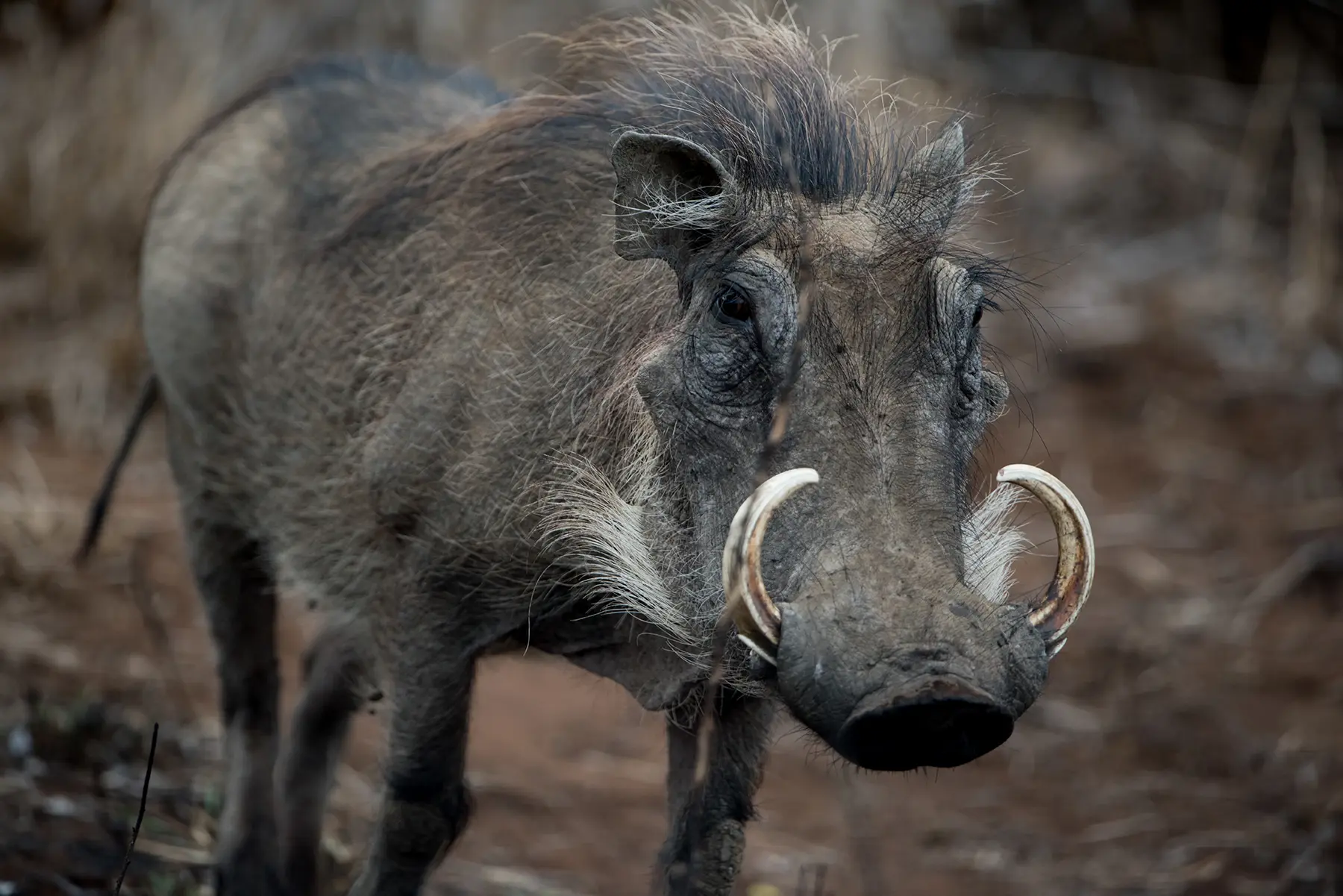
The common warthog (Phacochoerus africanus) is a member of the wild pig family and one of Africa’s most recognisable animals. Adults stand 60 to 75 cm at the shoulder and weigh between 50 and 100 kg, with boars being substantially larger than sows. The warthog’s most prominent features are its large, flattened head with prominent facial warts, a sparse mane of coarse bristles running along the spine, and a thin, tufted tail that stands upright like an antenna when the animal runs.
The real trophy lies in the tusks. Warthog have two pairs — the upper tusks curve upward and outward from the sides of the snout and can reach impressive lengths, while the shorter, sharper lower tusks are honed to razor edges against the uppers and serve as the animal’s primary weapons. A mature boar with well-developed upper tusks is a highly prized trophy. Warthog are primarily grazers, feeding on their knees in a characteristic posture as they crop short grasses. They shelter in abandoned aardvark burrows, backing in so that their tusks face any intruder — a habit that has saved many a warthog from predators.
Warthog are diurnal and most active during the cooler hours of morning and late afternoon. They are alert and surprisingly quick, capable of reaching speeds of up to 50 km/h over short distances. When alarmed, they make for their burrows at a flat sprint with their tails held vertically, providing one of the most comical sights in the African bush.
Hunting Methods
Rifle Hunting
Rifle hunting warthog is a dynamic, fast-paced affair. The most common approach involves driving through the property and spotting warthog as they feed in open areas or along the edges of bush. Once a boar with good tusks has been identified, a quick stalk on foot is required. Warthog rarely stand still for long — they feed, trot, stop, look around, and move on in an unpredictable pattern. Shots are often taken at moderate ranges of 80 to 150 metres and may need to be taken quickly when the boar pauses.
Caliber requirements for warthog are modest. A .243 Winchester is adequate for broadside shots at moderate range, while the .308 Winchester offers a good balance of power and versatility, especially if you are hunting warthog as part of a mixed-species hunt. The .270 Winchester and .30-06 are also perfectly suitable. Use controlled-expansion or bonded bullets — warthog are tougher than their size suggests, and the shoulder area is well-protected by thick cartilage wart pads and dense muscle.
Bow Hunting
Warthog are arguably the premier bow hunting species in Africa. The standard method is hunting from a ground blind or pit blind set over a water source. During the dry winter months, warthog visit water points regularly and predictably, often approaching with relative confidence once they have committed to drinking. This provides bow hunters with close, broadside shot opportunities at distances of 10 to 25 metres. A minimum draw weight of 55 pounds with heavy, fixed-blade broadheads is recommended. Shot placement is critical — aim tight behind the shoulder for a double-lung hit. The excitement of having a big boar approach your blind at close range, tusks glinting in the afternoon sun, is one of bow hunting’s great thrills.
Walk and Stalk
Stalking warthog on foot is possible and entertaining, though the animal’s unpredictable movements and alert senses make it more challenging than it might appear. The key is spotting a feeding boar from a distance and planning an approach that uses wind and cover to close the gap. Warthog tend to feed with their heads down, which limits their field of vision, but they raise their heads frequently to scan for danger. Move when the head is down and freeze when it comes up. The stalk can be fast and exciting when a boar suddenly decides to trot off in an unexpected direction, requiring you to adapt your plan on the fly.
Where to Hunt
Warthog are widespread across Limpopo Province and thrive in the mixed bushveld habitat of Gaspare Spanio Safaris’ private concession. The property’s combination of open grassland for feeding and dense bush with numerous burrow sites provides ideal warthog habitat. Water points are distributed across the farm, attracting warthog throughout the day and providing excellent bow hunting opportunities. Warthog are encountered on virtually every day of hunting, whether you are specifically targeting them or pursuing other species — they have a habit of appearing when you least expect them and disappearing just as quickly.
Best Time to Hunt
Warthog can be hunted year-round in Limpopo, though the dry winter months from May to September are optimal. Reduced grass cover makes spotting and stalking easier, and the scarcity of standing water concentrates animals at known water points — a critical advantage for bow hunters. The cooler temperatures of winter also mean warthog are active for longer periods during the day rather than retreating to their burrows during the midday heat. During the summer months, warthog are harder to spot in the tall grass, though the population remains healthy and huntable. The breeding season occurs in late autumn, during which boars become more active and aggressive as they compete for sows.
Trophy Information
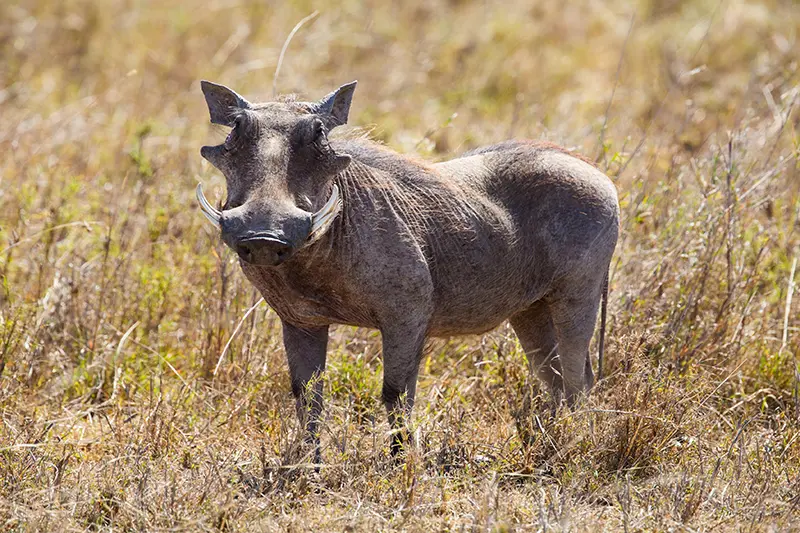
Warthog trophies are judged on the length and curvature of the upper tusks and, to a lesser extent, the ivory quality and overall mass. A good trophy boar will have long, curved upper tusks that sweep outward and upward in a graceful arc. The lower tusks are usually shorter but razor-sharp and add to the character of the mount.
- SCI minimum entry score: 30 inches (combined measurement of both upper tusks)
- Rowland Ward minimum entry: 13 inches (single longest upper tusk, measured around the outer curve)
A warthog boar with upper tusks measuring 10 to 12 inches per side is a solid trophy. Boars exceeding 13 inches are exceptional and increasingly rare. Estimating tusk length in the field is challenging, as much of the tusk is concealed within the socket. Your professional hunter will assess the visible tusk length and curvature, the boar’s overall age and body size, and the wear pattern on the tips to determine trophy quality.
Shot Placement For a Warthog Hunt in South Africa
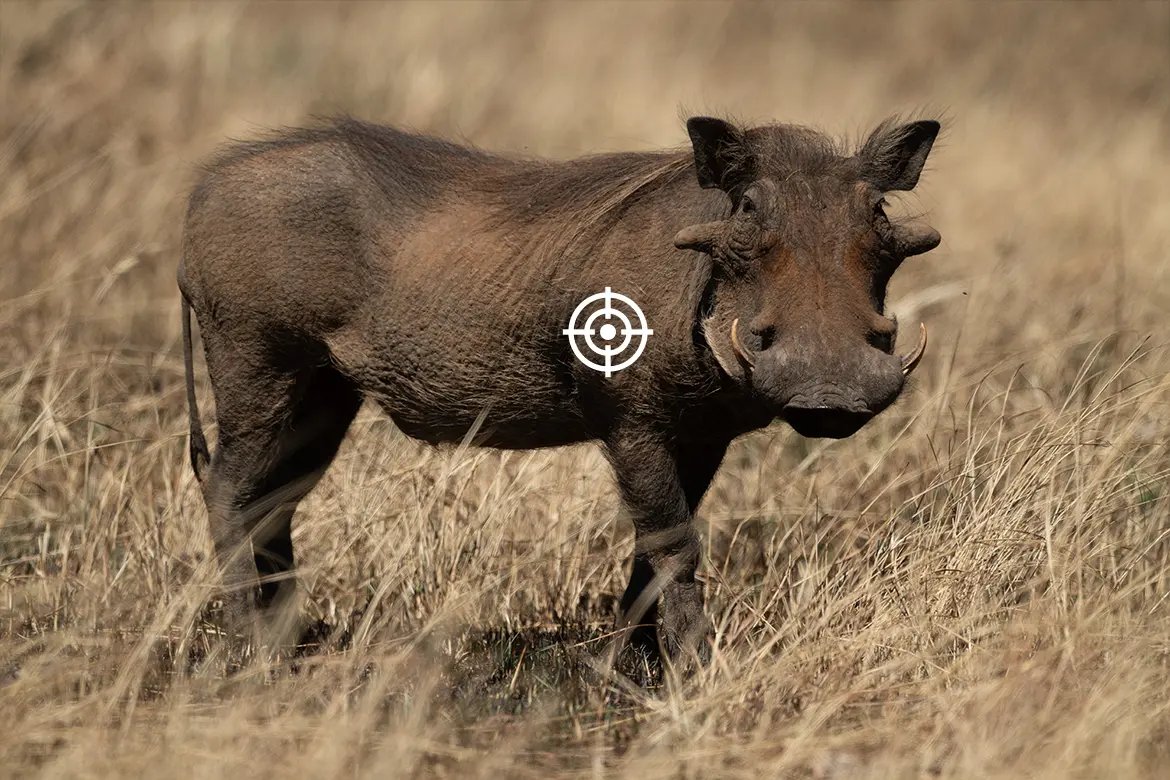
Warthog have a compact body with the vital organs positioned relatively far forward and low in the chest. For a broadside shot, the point of aim is directly on the front edge of the shoulder, one-third of the way up from the bottom of the chest. This places the bullet through the heart and lungs. Due to the warthog’s thick shoulder cartilage and forward-positioned vitals, placing the shot too far back is the most common error and can result in a gut-shot animal.
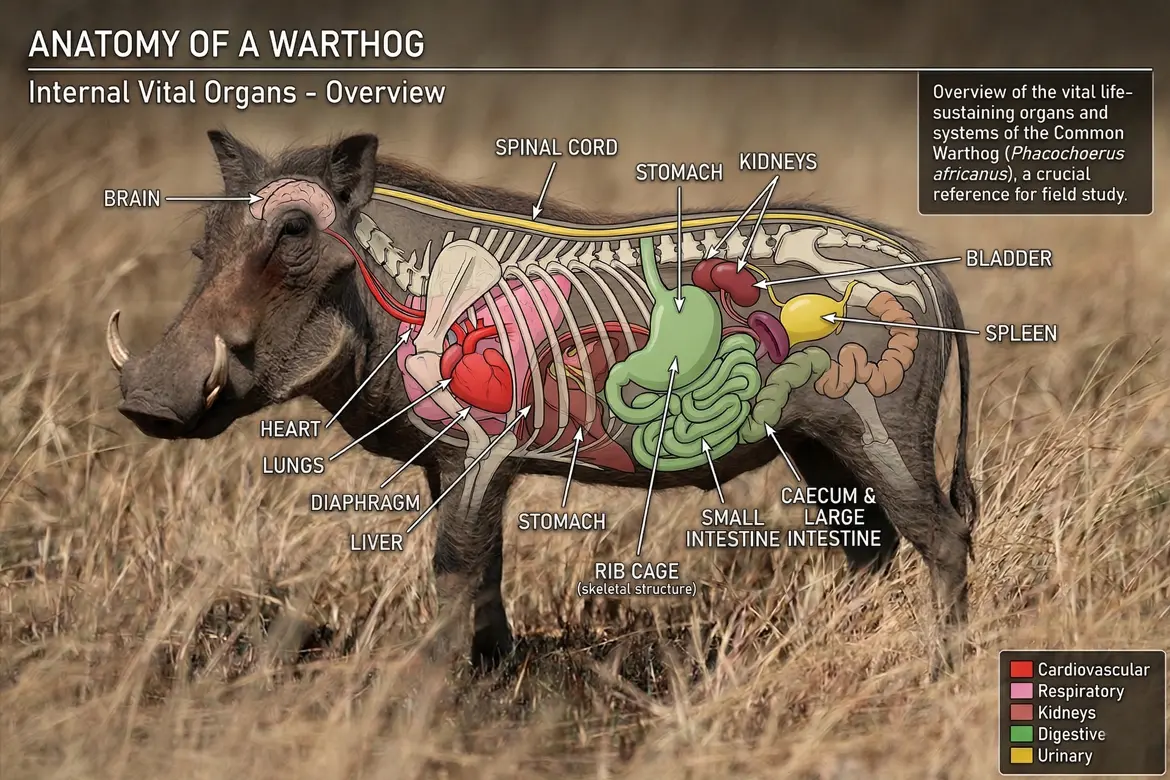
For a quartering-away shot, aim for the opposite shoulder through the rib cage. Head shots and neck shots are not recommended due to the warthog’s low, angular head profile and relatively small brain. If the warthog is trotting, it is better to wait for a pause rather than attempt a shot on a moving target — they often stop briefly to look around before committing to a full sprint. For bow hunters, the same principle applies: aim tight behind the shoulder, low, and wait for a completely broadside or very slightly quartering-away angle.
What’s Included
A warthog hunt with Gaspare Spanio Safaris includes:
- Dedicated professional hunter and experienced trackers
- Comfortable lodge accommodation on the private game farm
- All meals and refreshments, including packed lunches and drinks in the field
- 4×4 hunting vehicle and all field equipment, including bow hunting blinds
- Field preparation of your trophy — skinning, cleaning, salting, and delivery to taxidermist
- Daily laundry service
- Airport transfers from Polokwane or Johannesburg by prior arrangement
Trophy fees, taxidermy work, dipping and packing, and CITES/export permits are charged separately. Warthog are one of the most affordable trophy species in South Africa, making them an excellent addition to any hunting package.
Frequently Asked Questions
Are warthog dangerous?
A wounded warthog can be dangerous, particularly in thick bush or near its burrow. The lower tusks are razor-sharp and capable of inflicting serious lacerations. However, a healthy warthog’s first instinct is always to flee. The key to safety is accurate shot placement that puts the animal down quickly. Your professional hunter will always be prepared for a follow-up shot if needed.
What is the best mount for a warthog?
The most popular mount is a shoulder mount, which displays the boar’s impressive tusks and characterful face to full effect. A European skull mount showing the cleaned skull and full set of tusks is another excellent and more affordable option. Some hunters opt for a full-body mount to capture the warthog’s distinctive running posture with tail erect. Tusk-only mounts on a plaque are popular for hunters seeking a more compact trophy display.
Can I hunt warthog with a bow from a blind?
Yes, and it is one of the best bow hunting experiences available in Africa. Warthog hunting South Africa from a water blind is productive, exciting, and offers close shot opportunities. We maintain several permanent and semi-permanent blinds positioned at active water points. Bow hunts are typically scheduled to coincide with the dry winter months when water-dependent species visit these points most frequently.
How do I tell a boar from a sow?
Boars are noticeably larger than sows, with a heavier, wider head, more prominent facial warts, and larger tusks. The boar has two pairs of prominent warts — one pair below the eyes and one pair on the sides of the jaw — while the sow has only the upper pair. At a distance, the boar’s larger overall body size and broader face are the most reliable distinguishing features.
What does warthog taste like?
Warthog meat is lean, mild, and surprisingly tender when prepared correctly. It is lighter in flavour than domestic pork and exceptionally versatile — excellent grilled as chops or steaks, slow-cooked in a potjie, or dried as biltong. Many visiting hunters consider warthog one of the best-tasting game meats in Africa. You will have the opportunity to enjoy it prepared by our lodge chef during your stay.
There is no hunt in Africa quite like pursuing a big-tusked warthog through the Limpopo bushveld. Whether you sit in a bow blind with your heart pounding as a boar approaches the water, or make a quick stalk through the thorn scrub with your rifle on sticks, warthog hunting South Africa delivers excitement, challenge, and a trophy that will make everyone who sees it smile. Contact Gaspare Spanio Safaris at gasparespaniosafaris.co.za to add a warthog to your safari wish list.
Related Hunts
Hunters who pursue Warthog also enjoy these species:
- Bushpig Hunting South Africa
- Impala Hunting South Africa
- Baboon Hunting South Africa
- Jackal Hunting South Africa
View all huntable species at Gaspare Spanio Safaris.

